October 10, 2024
DAILY BIBLE READING – John Chapter 4
1 When therefore the Lord knew how the Pharisees had heard that Jesus made and baptized more disciples than John,
2 (Though Jesus himself baptized not, but his disciples,)
3 He left Judaea, and departed again into Galilee.
4 And he must needs go through Samaria.
5 Then cometh he to a city of Samaria, which is called Sychar, near to the parcel of ground that Jacob gave to his son Joseph.
6 Now Jacob’s well was there. Jesus therefore, being wearied with his journey, sat thus on the well: and it was about the sixth hour.
7 There cometh a woman of Samaria to draw water: Jesus saith unto her, Give me to drink.
8 (For his disciples were gone away unto the city to buy meat.)
9 Then saith the woman of Samaria unto him, How is it that thou, being a Jew, askest drink of me, which am a woman of Samaria? for the Jews have no dealings with the Samaritans.
10 Jesus answered and said unto her, If thou knewest the gift of God, and who it is that saith to thee, Give me to drink; thou wouldest have asked of him, and he would have given thee living water.
11 The woman saith unto him, Sir, thou hast nothing to draw with, and the well is deep: from whence then hast thou that living water?
12 Art thou greater than our father Jacob, which gave us the well, and drank thereof himself, and his children, and his cattle?
13 Jesus answered and said unto her, Whosoever drinketh of this water shall thirst again:
14 But whosoever drinketh of the water that I shall give him shall never thirst; but the water that I shall give him shall be in him a well of water springing up into everlasting life.
15 The woman saith unto him, Sir, give me this water, that I thirst not, neither come hither to draw.
16 Jesus saith unto her, Go, call thy husband, and come hither.
17 The woman answered and said, I have no husband. Jesus said unto her, Thou hast well said, I have no husband:
18 For thou hast had five husbands; and he whom thou now hast is not thy husband: in that saidst thou truly.
19 The woman saith unto him, Sir, I perceive that thou art a prophet.
20 Our fathers worshipped in this mountain; and ye say, that in Jerusalem is the place where men ought to worship.
21 Jesus saith unto her, Woman, believe me, the hour cometh, when ye shall neither in this mountain, nor yet at Jerusalem, worship the Father.
22 Ye worship ye know not what: we know what we worship: for salvation is of the Jews.
23 But the hour cometh, and now is, when the true worshippers shall worship the Father in spirit and in truth: for the Father seeketh such to worship him.
24 God is a Spirit: and they that worship him must worship him in spirit and in truth.
25 The woman saith unto him, I know that Messias cometh, which is called Christ: when he is come, he will tell us all things.
26 Jesus saith unto her, I that speak unto thee am he.
27 And upon this came his disciples, and marvelled that he talked with the woman: yet no man said, What seekest thou? or, Why talkest thou with her?
28 The woman then left her waterpot, and went her way into the city, and saith to the men,
29 Come, see a man, which told me all things that ever I did: is not this the Christ?
30 Then they went out of the city, and came unto him.
31 In the mean while his disciples prayed him, saying, Master, eat.
32 But he said unto them, I have meat to eat that ye know not of.
33 Therefore said the disciples one to another, Hath any man brought him ought to eat?
34 Jesus saith unto them, My meat is to do the will of him that sent me, and to finish his work.
35 Say not ye, There are yet four months, and then cometh harvest? behold, I say unto you, Lift up your eyes, and look on the fields; for they are white already to harvest.
36 And he that reapeth receiveth wages, and gathereth fruit unto life eternal: that both he that soweth and he that reapeth may rejoice together.
37 And herein is that saying true, One soweth, and another reapeth.
38 I sent you to reap that whereon ye bestowed no labour: other men laboured, and ye are entered into their labours.
39 And many of the Samaritans of that city believed on him for the saying of the woman, which testified, He told me all that ever I did.
40 So when the Samaritans were come unto him, they besought him that he would tarry with them: and he abode there two days.
41 And many more believed because of his own word;
42 And said unto the woman, Now we believe, not because of thy saying: for we have heard him ourselves, and know that this is indeed the Christ, the Saviour of the world.
43 Now after two days he departed thence, and went into Galilee.
44 For Jesus himself testified, that a prophet hath no honour in his own country.
45 Then when he was come into Galilee, the Galilaeans received him, having seen all the things that he did at Jerusalem at the feast: for they also went unto the feast.
46 So Jesus came again into Cana of Galilee, where he made the water wine. And there was a certain nobleman, whose son was sick at Capernaum.
47 When he heard that Jesus was come out of Judaea into Galilee, he went unto him, and besought him that he would come down, and heal his son: for he was at the point of death.
48 Then said Jesus unto him, Except ye see signs and wonders, ye will not believe.
49 The nobleman saith unto him, Sir, come down ere my child die.
50 Jesus saith unto him, Go thy way; thy son liveth. And the man believed the word that Jesus had spoken unto him, and he went his way.
51 And as he was now going down, his servants met him, and told him, saying, Thy son liveth.
52 Then enquired he of them the hour when he began to amend. And they said unto him, Yesterday at the seventh hour the fever left him.
53 So the father knew that it was at the same hour, in the which Jesus said unto him, Thy son liveth: and himself believed, and his whole house.
54 This is again the second miracle that Jesus did, when he was come out of Judaea into Galilee.
King James Version. Public Domain
Commentary
Introduction
John chapter 4 addresses two significant events in Jesus’ ministry: the conversation with the Samaritan woman at Jacob’s well and the healing of the son of a royal official. Both stories illustrate the universal reach of Jesus’ message and His ability to inspire faith through deep spiritual understanding and miracles. Particularly noteworthy is the conversation with the Samaritan woman, as Jesus demonstrates that His message is not only for the Jews but for all people, regardless of social and ethnic barriers.
Commentary
Jesus and the Samaritan Woman (John 4:1-42)
The encounter between Jesus and the Samaritan woman begins with Jesus, weary from His journey, stopping at Jacob’s well in Samaria. When the woman comes to the well, Jesus asks her for water, which surprises her, as Jews typically did not associate with Samaritans (v. 9). This interaction transcends the social norms of the time and shows Jesus’ willingness to overcome barriers.
Jesus seizes the opportunity to introduce the concept of “living water” (v. 10), which symbolizes eternal life and the Holy Spirit. While the Samaritan woman initially thinks Jesus is referring to physical water, He leads her deeper into spiritual truths and reveals that the water He offers will never leave them thirsty again but will become a source of eternal life within them (v. 14).
The conversation unveils the woman’s personal history. Jesus discloses His knowledge of her five marriages and her current living situation (v. 18), prompting her to recognize Him as a prophet. The dialogue then shifts to the proper form of worship. Jesus explains that the time has come when true worshipers will worship God not at a specific location but in spirit and truth (v. 23-24). This statement breaks with the previous notion that worship was tied to geographic locations like the temple in Jerusalem.
Finally, Jesus reveals Himself to the woman as the promised Messiah (v. 26), which moves her to go into the city and tell others about Him. Many Samaritans believe in Jesus based on her testimony (v. 39), and even more after they have personally spoken with Him. This scene demonstrates that faith can arise not only through miracles but also through direct encounters with the truth of Jesus.
Healing of the Royal Official’s Son (John 4:43-54)
After two days in Samaria, Jesus returns to Galilee. There, a royal official asks Him to heal his dying son (v. 47). Jesus points out that people often believe only through signs and wonders (v. 48), but the official persists in his request. Jesus heals the son from afar, and the official believes Jesus’ word. When the official later learns that the healing occurred precisely at the moment Jesus spoke to him, he believes, along with his entire household (v. 53). This story illustrates faith that arises from trust in Jesus’ word, without the official having witnessed a visible miracle.
Summary
John chapter 4 demonstrates how Jesus breaks through social and religious barriers to proclaim His message of salvation and redemption. In His conversation with the Samaritan woman, He reveals Himself as the Messiah and speaks about true worship in spirit and truth. This encounter leads many Samaritans to believe in Jesus. The healing of the royal official’s son highlights the power of faith based solely on trust in Jesus’ word. Overall, the chapter shows that Jesus meets both spiritual and physical needs and that His salvation is available to all people.

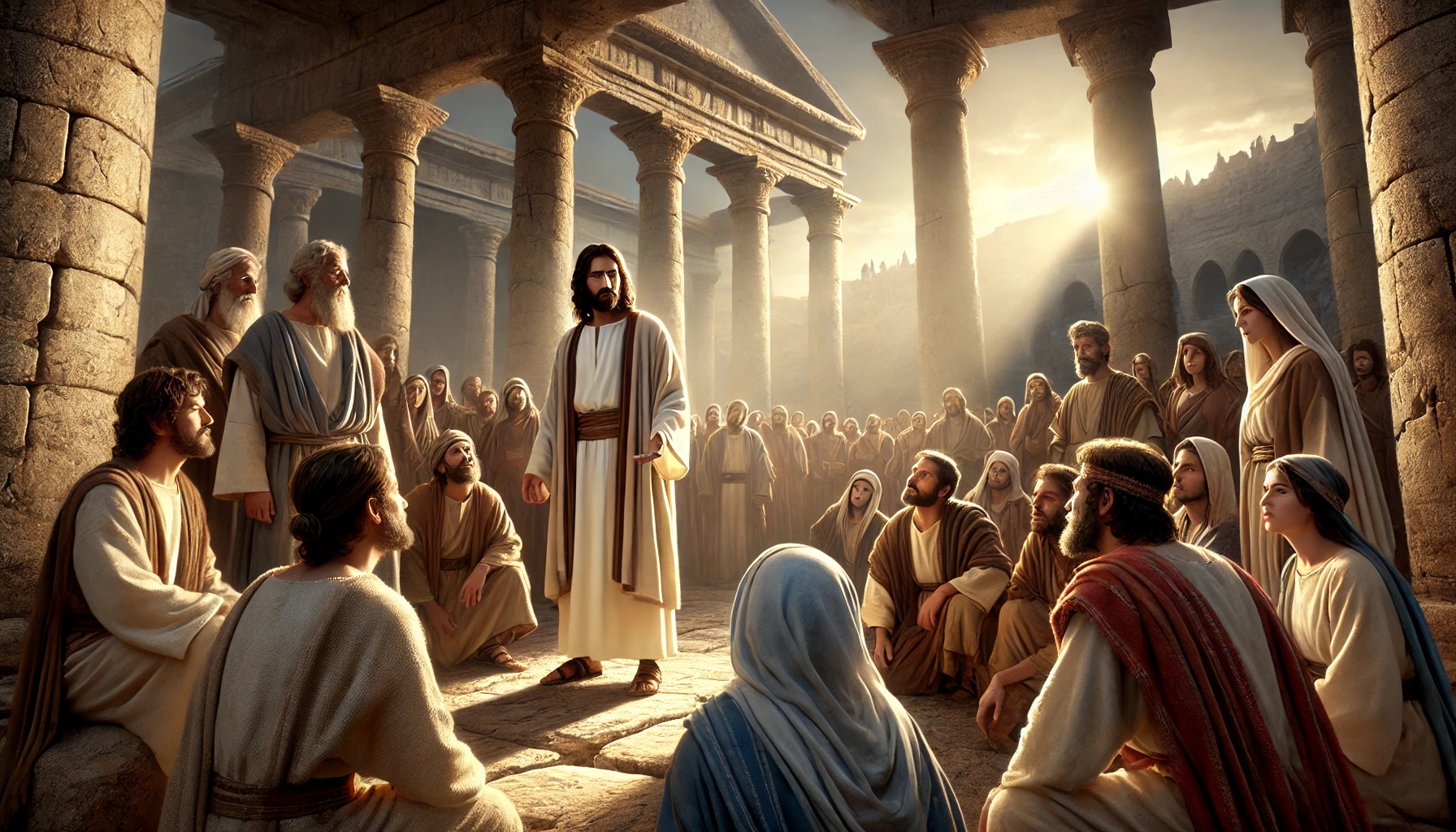
WEEKLY SPIRIT OF PROPHECY READING – Ellen White | The Desire of Ages
Chapter 68—In the Outer Court
This chapter is based on John 12:20-42.
Read online here
Commentary
Introduction
Chapter 68 is based on John 12:20-43 and deals with a pivotal event in Jesus’ life, when Greeks expressed the desire to see him. This chapter highlights the transition from Jesus’ earthly ministry to his impending sacrificial death on the cross, which would hold significance not only for the Jews but for all humanity. The desire of the Greeks to see Jesus symbolizes the universal appeal of his sacrifice and the expansion of the Gospel beyond the Jewish people.
Commentary
The chapter begins with the Greeks’ request to see Jesus, which Jesus interprets as a sign of his imminent glorification through his death on the cross. This encounter is reminiscent of the Magi who came at Jesus’ birth, signaling that Jesus’ mission is now extending beyond the borders of Israel. Jesus seizes the moment to compare his death to a grain of wheat that must die to bear fruit, emphasizing the necessity of his sacrifice for the salvation of the world.
The chapter underscores the importance of self-sacrifice, both in Jesus’ life and in the lives of his followers. Jesus speaks of his coming exaltation on the cross as the moment when he will draw all people to himself. Despite these revelations, many remain in disbelief, and even some of the leaders are afraid to publicly confess their faith.
Summary
Chapter 68 describes the final moments of Jesus before his crucifixion, interpreting the Greeks’ desire to see him as a sign of the expansion of his mission. Jesus explains that his death, like the death of a grain of wheat, is necessary to bring forth new life. The chapter emphasizes the universal significance of Jesus’ sacrifice and the spread of the Gospel beyond Israel. It calls for self-sacrifice, both for Christ and his followers, while reflecting the deep sorrow over the continued disbelief of many.
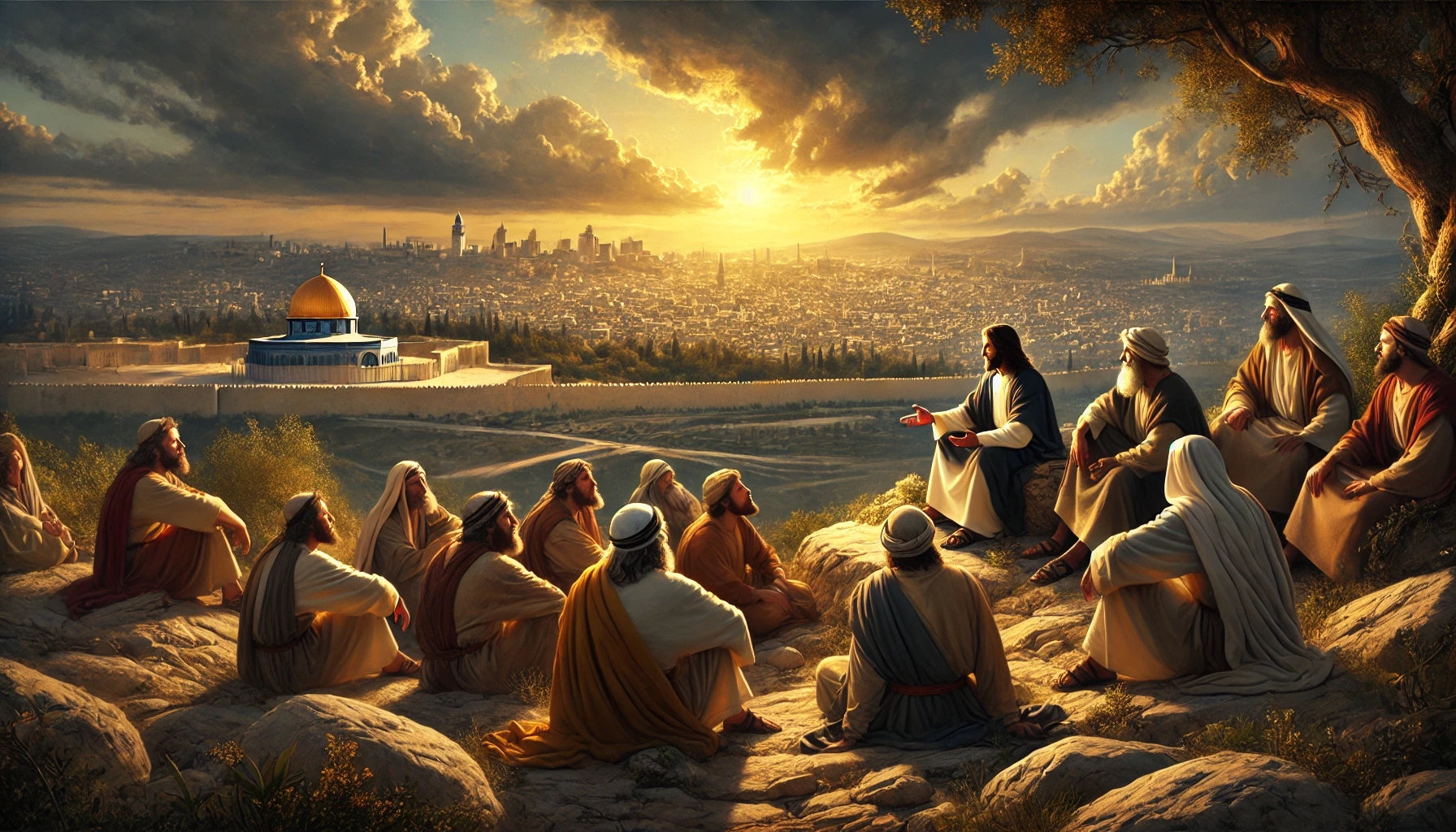
WEEKLY SPIRIT OF PROPHECY READING – Ellen White | The Desire of Ages
Chapter 69—On the Mount of Olives
This chapter is based on Matthew 24; Mark 13; Luke 21:5-38.
Read online here
Commentary
Introduction
Chapter 69 is based on the writings of Matthew 24, Mark 13, and Luke 21:5-38. It addresses Jesus’ prophetic announcements regarding the destruction of Jerusalem and His second coming. This discourse, delivered on the Mount of Olives, provides the disciples and future generations with guidance and warnings about upcoming trials and God’s ultimate triumph. Jesus instructs His disciples on the signs of the times and calls for vigilance and faithfulness in light of the forthcoming events.
Commentary
In this chapter, Jesus warns His disciples about the impending destruction of Jerusalem while simultaneously alluding to His second coming. He intertwines these two events in His prophetic announcements, emphasizing the necessity of vigilance. The signs that indicate the destruction of Jerusalem also serve as harbingers of the end times. Jesus speaks of false prophets, wars, famines, and persecutions that will precede the final judgment. He reminds His disciples not to be deceived and to maintain their faithfulness to God, even in the face of persecution. Finally, He points to the inevitable coming of the Son of Man in power and glory and encourages believers to remain steadfast in prayer and in anticipation of His return.
Summary
Chapter 69 describes Jesus’ significant sermon on the Mount of Olives, in which He prophesies the destruction of Jerusalem and His second coming. He provides the disciples with signs of the impending events and calls for constant vigilance. By linking the fall of Jerusalem with the end times, Jesus urges believers to examine their hearts, avoid deception, and faithfully await His return. The chapter underscores that both the destruction of Jerusalem and the second coming of Christ are part of the divine plan and that God will ultimately save His believers.
Source: https://fulfilleddesire.net/10-10-2024-john-chapter-4-believe-his-prophets/

 (
(