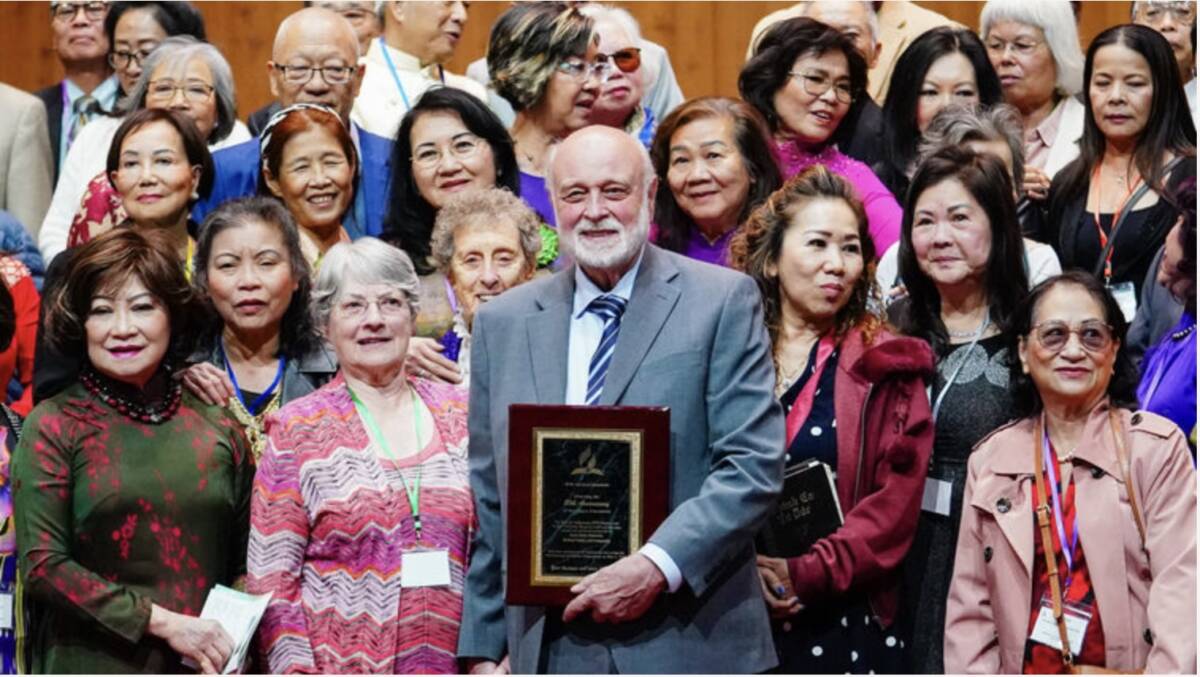
The journey of faith can lead to remarkable blessings. How did Pastor Ibong's dedication and patience culminate in a life-changing gift? Reflect on this powerful narrative and subscribe for further exploration of faith and divine provision. #DivineProvision #OutreachMinistry #InspiringStories #awr #adventistworldradio #short Source: https://www.youtube.com/watch?v=OdBWSKpdD50
Monday: Gut-Wrenching Love
Daily Lesson for Monday 20th of January 2025
The incalculable depths of God’s compassionate love for humanity are manifested in Hosea. God had commanded the prophet Hosea, “ ‘Go, take yourself a wife of harlotry and children of harlotry, for the land has committed great harlotry by departing from the Lord’ ” (Hosea 1:2, NKJV). Hosea 11:1-12 later depicts God’s relationship with His people, but with the metaphor of a loving father for his child.
Read Hosea 11:1-9. How does the imagery in these verses bring to life the way God loves and cares for His people?
God’s love for His people is likened to the tender affection of a parent for a child. Scripture uses the imagery of teaching a young child to walk; taking one’s beloved child in one’s arms; healing and providing sustenance; and otherwise tenderly caring for His people. Scripture also states that God “carried” His people just “ ‘as a man carries his son’ ” (Deuteronomy 1:31, NKJV). In “His love and in His mercy He redeemed them” and “lifted them and carried them all the days of old” (Isaiah 63:9, NASB).
In contrast to God’s unwavering faithfulness, His people were repeatedly unfaithful, ultimately pushing God away and bringing judgment upon themselves and deeply grieving Him. God is compassionate, but never to the exclusion of justice. (As we will see in a later lesson, love and justice go together.)
Have you ever been so upset about something that your stomach churns? That is the kind of imagery used for the depth of God’s emotions over His people. The imagery of one’s heart turning over and compassions being kindled is idiomatic language of deep emotions, used of both God and humans.
This imagery, of compassions being kindled (kamar), is used in the case of the two women who came before Solomon, each one claiming the same baby as her own. When Solomon ordered the infant cut in two (with no intention to harm the child), this imagery described the emotional reaction of the real mother (1 Kings 3:26; compare with Genesis 43:30).
|
Anyone who has ever been a parent knows what the lesson is talking about. No other earthly love begins to compare. How does this help us understand the reality of God’s love for us, and what comfort can, and should, we draw from this understanding? |
(0)How Isaac and Rachel Inspired Their Community
Are you curious about how one couple's faith can transform an entire village? Join us as we delve into Isaac and Rachel's story and the incredible impact of their baptism on their community. Subscribe for more insights into the power of faith in action. #RadioMinistry #VillageTransformation #NewLifeInChrist #awr #adventistworldradio #short Source: https://www.youtube.com/watch?v=cN_Brmhsk-k
How One Home Became a Beacon of Faith
Explore the inspiring story of a congregation that meets in a new member's home, showcasing the power of community support in faith. How has radio ministry impacted the Lyra district and led to the establishment of four churches? Join us for this uplifting narrative and subscribe for more inspiring content. #CommunityFaith #RadioMinistry #ChurchGrowth #awr #adventistworldradio #short Source: https://www.youtube.com/watch?v=B8Nzb2lONaA
Sunday: More Than a Mother’s Love
Daily Lesson for Sunday 19th of January 2025
Perhaps the greatest love common to human experience is the love of a parent for a child. The Bible often uses the imagery of the parent-child relationship to depict God’s amazing compassion for people, emphasizing that God’s compassion is exponentially greater than even the deepest and most beautiful human expression of the same emotion.
Read Psalms 103:13, Isaiah 49:15, and Jeremiah 31:20. What do these depictions convey about the nature and depth of God’s compassion?
According to these texts, God relates to us as His beloved children, loving us as a good father and mother love their children. Yet, as Isaiah 49:15 explains, even a human mother might “forget her nursing child” or “not have compassion on the son of her womb” (NKJV), but God never forgets His children, and His compassion never fails (Lamentations 3:22).
Notably, the Hebrew term raḥam, used for compassion here and in many other texts describing God’s abundant compassionate love, is believed to be derived from the Hebrew term for womb (raḥam). And thus, as scholars have noted, God’s compassion is a “womb-like mother-love.” Indeed, it is exponentially greater than any human compassion, even that of a mother for her newborn.
According to Jeremiah 31:20 (NKJV), God views His covenant people as His “dear son” and “pleasant child,” despite the fact that they often rebelled against Him and grieved Him. Even so, God declares, “My heart yearns for him” and “I will surely have mercy on him.” The term translated “mercy” here is the term used above for divine compassion (raḥam). Further, the phrase “My heart yearns” can be translated literally as “My innards roar.” This description is the deeply visceral language of divine emotion, signifying the profound depth of God’s compassionate love for His people. Even despite their infidelity, God continues to bestow His abundant compassion and mercy on His people and does so beyond all reasonable expectations.
|
For some of us, recognizing that God’s compassion for us is akin to that of a loving father or mother is deeply comforting. However, some people might struggle because their parent or parents were not loving. What other ways could God’s compassion be revealed to them? |
(0)Source: https://ssnet.org/blog/25a-04-more-than-a-mothers-love/
- « Previous Page
- 1
- …
- 500
- 501
- 502
- 503
- 504
- …
- 4413
- Next Page »