View an in-depth discussion of Repentance and Forgiveness in the Hope Sabbath School class led by Pastor Derek Morris.
Click on the image below to view the video:
With thanks to Hope Channel – Television that will change your life.
Closer To Heaven
|
|
|
View an in-depth discussion of Repentance and Forgiveness in the Hope Sabbath School class led by Pastor Derek Morris.
Click on the image below to view the video:
With thanks to Hope Channel – Television that will change your life.
Daily Lesson for Wednesday 3rd of June 2026
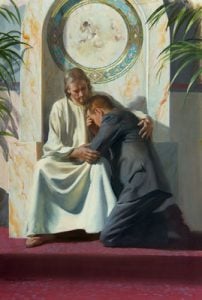
When we feel the weight of our sin and allow the Holy Spirit to lead us to the foot of the cross, we should ask for God’s forgiveness, knowing that “the Lord is merciful and gracious, slow to anger, and abounding in mercy” (Psalms 103:8, NKJV). This same verse was spoken by God Himself (Exodus 34:6) after His chosen nation had grieved Him.
The fact that the Lord is merciful and gracious, slow to anger, and abounding in mercy is also the very reason Jesus died on the cross—so that our relationship with God could be made right again.

Image © Providence Collection from GoodSalt.com
It’s when we are willing to acknowledge and confess our sin; when we say, O, Lord, here I am again . . . “ ‘Be merciful to me a sinner!’ ” (Luke 18:13, NKJV), that Jesus—who has already been working in us and for us with the Holy Spirit before we even call out to Him—sees the weight and takes it from us. Our burdens are lifted at Calvary, and Jesus is surely very near when we come to Him and, even before, seeks us as the Good Shepherd and stands at the door and knocks (Revelation 3:20). Let’s not stay away from the Cross, looking at God from a distance. Let’s run to Jesus and exchange our sins and burdens for His righteousness (Zechariah 3:4).
Slowly read the following verses. Write in your own words what they tell you about God’s grace toward you:
|
“But God demonstrates His own love toward us, in that while we were still sinners, Christ died for us” (Romans 5:8, NKJV). |
Is this True, Somewhat True, or False: Repentance means being sorry for what you did and deciding never to do it again. Join the Hit the Mark panel as they discuss Sabbath School Lesson 10 – Repentance and Forgiveness. It’s the fastest hour of the week! Get your copy of this week’s keyword handout HERE.

A lot of us have our own ideas of what repentance means, so let’s look at what repentance means in the Bible.
The first Biblical example of repentance is God Himself.
And God saw that the wickedness of man was great in the earth, and that every imagination of the thoughts of his heart was only evil continually. And it repented the Lord that he had made man on the earth, and it grieved him at his heart. And the Lord said, I will destroy man whom I have created from the face of the earth; both man, and beast, and the creeping thing, and the fowls of the air; for it repenteth me that I have made them. Genesis 6:5-7 KJV
God repented that He had made man, so what did He do? He destroyed mankind (Except Noah and his family), showing us what repentance means to God. Repentance is undoing to the best of your ability what you have done. Of course, God had not done anything wrong, but in this example, we see that repentance is not simply saying “sorry.” It is undoing what you previously did.
Next, we see Judah give a beautiful example of repentance.
“So please, my lord, let me stay here as a slave instead of the boy, and let the boy return with his brothers. For how can I return to my father if the boy is not with me? I couldn’t bear to see the anguish this would cause my father!” Genesis 44:33-34 NLT
Juday had already broken his father’s heart by helping his brothers get rid of Joseph. So, when Judah was faced with the possibility of Benjamin being taken from his father, he could not bear to see the sorrow this would cause him, so he pleaded to be a slave in Egypt the rest of his life instead of breaking his father’s heart. Judah repented by having an attitude that said, “I have broken my father’s heart before, and I would rather die a slave in a foreign land than ever break his heart again.” I have heard it said that legalism is when you say, I broke a rule, while true repentance is saying, I broke my father’s heart. True repentance does not break our hearts because of the consequences our sins brought to us. True repentance breaks our hearts because of what our sin did to God and others.
Against you, and you alone, have I sinned; I have done what is evil in your sight. You will be proved right in what you say, and your judgment against me is just. Psalm 51:4 NLT
In Luke 19:1-10, Zacchaeus shows us true repentance when, like God earlier in Genesis 6, Zacchaeus resolves to undo the damage he has done.
Meanwhile, Zacchaeus stood before the Lord and said, “I will give half my wealth to the poor, Lord, and if I have cheated people on their taxes, I will give them back four times as much!” Luke 19:8 NLT
Zacchaeus shows true repentance by making things right. This could mean paying back the money we owe, but it may also mean going back to people who have heard us say bad things about others and correcting what we have said. When Zacchaeus saw his sin he was quick to repent. We can go quickly to God when we need to repent as well, remembering,
But if we confess our sins to him, he is faithful and just to forgive us our sins and to cleanse us from all wickedness.1 John 1:9 NLT
We don’t have to hesitate to go to our Father as soon as we realize we have messed up. I have also heard it said that legalism is saying, I made a mistake, my father is going to kill me. The Gospel is saying, I made a mistake. I need to call my dad.
In the last example, we see that repentance is changing our attitude.
Then one of the criminals who were hanged blasphemed Him, saying, “If You are the Christ, save Yourself and us.” But the other, answering, rebuked him, saying, “Do you not even fear God, seeing you are under the same condemnation? And we indeed justly, for we receive the due reward of our deeds; but this Man has done nothing wrong.” Then he said to Jesus, “Lord, remember me when You come into Your kingdom.” Luke 23:39-42 NKJV
Interestingly enough, the repentant thief is not recorded as saying, “Sorry.” Repentance is not just saying sorry, and in this case, he may not have ever said he was sorry. More importantly, he changed his attitude towards Jesus, and went from mocking him earlier to now calling Jesus Lord in front of the crowd. The “sorry” was seen in the change of attitude. I believe this change of attitude is also what Peter was talking about in Acts 2.
Then Peter said to them, “Repent, and let every one of you be baptized in the name of Jesus Christ for the remission of sins; and you shall receive the gift of the Holy Spirit. Acts 2:38 NLT
Oftentimes, I have seen this text used to demonstrate how we have to repent and turn from drugs and alcohol, etc., before being baptized. While that may be true, what Peter is addressing in Acts 2 is the attitude of the Jewish leaders towards Jesus. When Peter tells them to repent, the context is their attitude about Jesus. Like the repentant thief who changed his attitude about Jesus, Peter is telling us to repent and change our attitude about Jesus.
Real reconciliation happens when we change our defiant attitude towards Jesus and accept Him as our Lord and Savior. We may believe that the call to repentance is for “sinners out there” who are immersed in the world. But Jesus is calling the church of Laodicea – the church professing to look for His coming – to repent! (Rev. 3:14-19) That sounds like we, who are so “rich” in spiritual knowledge need to get down to basics and repent so that we may do the work that Jesus called us to do.
Daily Lesson for Tuesday 2nd of June 2026
The secular world bombards us with messages of independence, indulgence, and self-promotion—the opposite of the principles of God’s kingdom. Interestingly, the first words recorded in the Bible by John the Baptist and Jesus were similar. John said, “ ‘Repent, for the kingdom of heaven is at hand!’ ” (Matthew 3:1-2, NKJV). Jesus said, “ ‘The time is fulfilled, and the kingdom of God is at hand. Repent, and believe in the gospel’ ” (Mark 1:14-15, NKJV; see also Luke 24:46-47). Both Jesus and John called those listening to repentance because the kingdom of heaven was near. Could it be that this same message is equally as relevant to us today?
Copyright Review and Herald Publishing Assn. @ Goodsalt.com
The kindness and goodness of God leads us to repentance (Romans 2:4). Repentance involves two steps: (1) sincere pain and sorrow for our sins; and (2) the honest decision to abandon sin. In the Bible, repentance is almost always connected to forgiveness. We genuinely repent; God forgives. It’s that simple (1 John 1:9, Revelation 3:19). “The Lord is not slack concerning His promise, as some count slackness, but is longsuffering toward us, not willing that any should perish but that all should come to repentance” (2 Peter 3:9, NKJV). As we personally prepare our souls for the Second Coming, God is giving us time to make things right with Him.
Jesus suffered, died, and rose so that when we repent, His grace can work a miracle in our lives. Contrary to the world, which tells us we are fine just the way we are, God asks that we turn to Him in repentance and faith (Acts 20:21), placing ourselves fully in His hands so that He can prune and beautifully shape our characters into His likeness, to testify of Him (John 15:2,8). We then grow and produce fruit in keeping with repentance (Matthew 3:8).
“No repentance is genuine that does not work reformation. The righteousness of Christ is not a cloak to cover unconfessed and unforsaken sin; it is a principle of life that transforms the character and controls the conduct.”—Ellen G. White, The Desire of Ages, Pages 555, 556.
|
Repentance leads to life (Acts 11:18) and is a vital part of growing in a relationship with God. In the process of surrender, repentance, and allowing God to prune you, what step is most challenging for you? |
 Intercer is a website with biblical materials in Romanian, English, Hungarian and other languages. We want to bring the light from God's Word to peoples homes. Intercer provides quality Christian resources...[Read More]