“God loves a cheerful giver” (2 Cor. 9:7, NIV), and generous giving is an important aspect of the Christian life. While we must allow the Bible to challenge our giving and financial priorities, generosity is more than just throwing money at a cause, no matter how worthy.
Instead, generosity is one of the largest of life attitudes and a key quality of “those who fear the LORD”, as noted a number of times in Psalm 112: “Good will come to those who are generous and lend freely, who conduct their affairs with justice” (Ps. 112:5, NIV).
What do the following texts teach about generosity toward those in need? Lev. 25:35-37, Ps. 119:36, 2 Cor. 8:12-15, 1 John 3:16-18, 1 Tim. 6:17-19.
Generosity
In his New Testament letters, Paul regularly cited the generosity of God—expressed most fully in Jesus’ giving His life for us—as the source of the Christian hope. In turn, His death for us was also the motivation for our living a life of generosity toward others: “I pray that your partnership with us in the faith may be effective in deepening your understanding of every good thing we share for the sake of Christ” (Philem. 1:6, NIV).
Generosity is an attitude toward life that is large, bold, and embracing. So much in our individual lives, societies, and cultures prompts us to focus on ourselves, to keep as much as we can for ourselves. And let’s face it, for most of us the default mode is always self, self, self anyway.
If it is real, our faith will cause us to die to self and live more for others. Our faith helps us imagine the world and its people as God sees them, in both their goodness and their brokenness, and it impels us to seek to help those in need, to whatever degree possible.
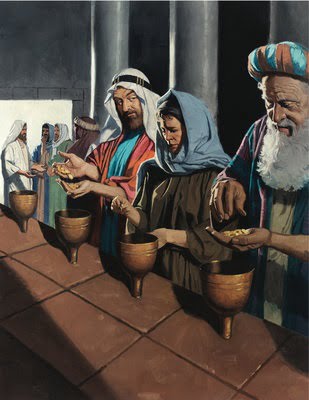
As a quality of living, generosity is readily appreciated by fundraisers and charities. Such generosity is measurable and directly practical. But large donations do not necessarily indicate a generous life (see Mark 12:41-44). A generous life is larger and more valuable than any donation. We need better to appreciate and cultivate a generous spirit in all that we do. For most people, generosity doesn’t come naturally; it is grace that we need to express in our lives proactively and purposely, regardless of the pull of our sinful, selfish humanity.
| Besides giving money, even generously, what are other ways that we should manifest a generous spirit? |
 (0)
(0) Source: http://feedproxy.google.com/~r/SabbathSchoolNet/~3/hZty3ETZnTg/