• Home
  • Devotionals
  • BiblePhone
  • Blogs
  • TV
  • Prayer
    • Submit Prayer Request
    • Prayer Requests List
  • Contact us
  • Romanian

Intercer Adventist News

Closer To Heaven

  • About us
    • About Adventist Church
    • About Intercer Adventist News
    • About Intercer
    • About Lucian Web Service
    • Latest News
    • Romanian Church News
  • News and Feeds
    • Intercer Adventist News
    • 60 Second SlideShows
    • “Adventist Tweets” Paper
    • Adventists on Twitter
    • Adventists on Google Plus
    • Bible Resources
      • Adventist Universities Daily Bible
      • Answers For Me
        • Dear God
        • Healthy Living
        • Life Notes
        • Spiritual applications
        • Vegetarian recipes
      • Better Sermons
        • Spirit Renew Quotes
      • Daily Bible Promise
      • E-GraceNotes
        • Bible Says
        • City Lights
        • Family First
        • Staying Young
      • Story Harvest
        • Personal Stories
      • SSNet.org
    • Churches & Organizations
      • Adventist News Network
      • Adventist Review
      • Adventist World Radio
      • Avondale College
      • Babcock University Nigeria
      • BC Alive
      • British Union Conference
      • Canadian Adventist Messenger
      • Canadian Union
      • North American Division News
      • Outlook Magazine
      • PM Church – Pastor’s Blog
      • Potomac Conference
      • Record Magazine – Australia
      • Review and Herald
      • Trans-European Division
      • Washington Conference
    • Health
      • Dr.Gily.com
      • Vegetarian-Nutrition.info
    • Ministries
      • 7 Miracle (Youth)
      • A Sabbath Blog
      • Adventist Blogs
      • Adventist Today
      • ADvindicate
      • Creative Ministry
      • Grace Roots
      • Romanian Church News
      • Rose’s Devotional
      • UNashamed
    • Personal
      • Alexandra Yeboah
      • Iasmin Balaj
      • Jennifer LaMountain
      • McQue’s View
      • Refresh with Tia
      • Shawn Boonstra
  • Sermons & Video Clips
    • Churches
      • Downey Adventist Church
      • Fresno Central SDA Church
      • Hillsboro Adventist Church
      • Mississauga SDA Church
      • New Perceptions Television (PM Church)
      • Normandie Ave SDA Church
      • Remnant Adventist Church
    • Organizations
      • Adventist News Network (ANN)
      • ADRA Canada
      • Adventists About Life
      • Adventist Education
      • Adventist Mission
      • Amazing Facts
      • Adventist Church Connect
      • BC Adventist
      • Church Support Services
      • In Focus (South Pacific)
      • IIW Canada
      • NAD Adventist
      • NAD Church Resource Center (Vervent)
      • NARLA
      • Newbold
      • Review & Herald
      • SECMedia
      • Video Avventista (Italy)
    • Ministries
      • 3AngelsTube.com
      • Answered.TV
      • AudioVerse.org
      • AYO Connect
      • Christian Documentaries
      • GAiN #AdventistGeeks
      • GYC
      • Intercer Websites
      • Josue Sanchez
      • LightChannel
      • Pan de Vida
      • Revival and Reformation
      • Stories of Faith
      • SAU Journalism/Communication
      • Spirit Flash
      • The Preaching Place (UK)
      • Toronto East Youth Nation
    • Personal
      • Esther-Marie Hartwell
      • McQuesView
      • Pastor Manny Cruz
    • Sabbath School
      • Ecole du Sabbat Adventiste
      • Sabbath School Audio Podast
      • Sabbath School daily
  • Resources
    • Bible and Bible Studies
    • Health
    • Music
  • All articles
  • G+ News & Marketplace
    • G+ News & Marketplace Group
    • G+ Page
You are here: Home / Archives for Adventist Sermons & Video Clips / Fulfilled Desire

Lesson 5.The Testimony of the Samaritans | 5.4 The Revelation of Jesus | THEMES IN THE GOSPEL OF JOHN | LIVING FAITH

October 29, 2024 By admin

5.4 The Revelation of Jesus
The Revelation of the Messiah: An Encounter Beyond Prejudices
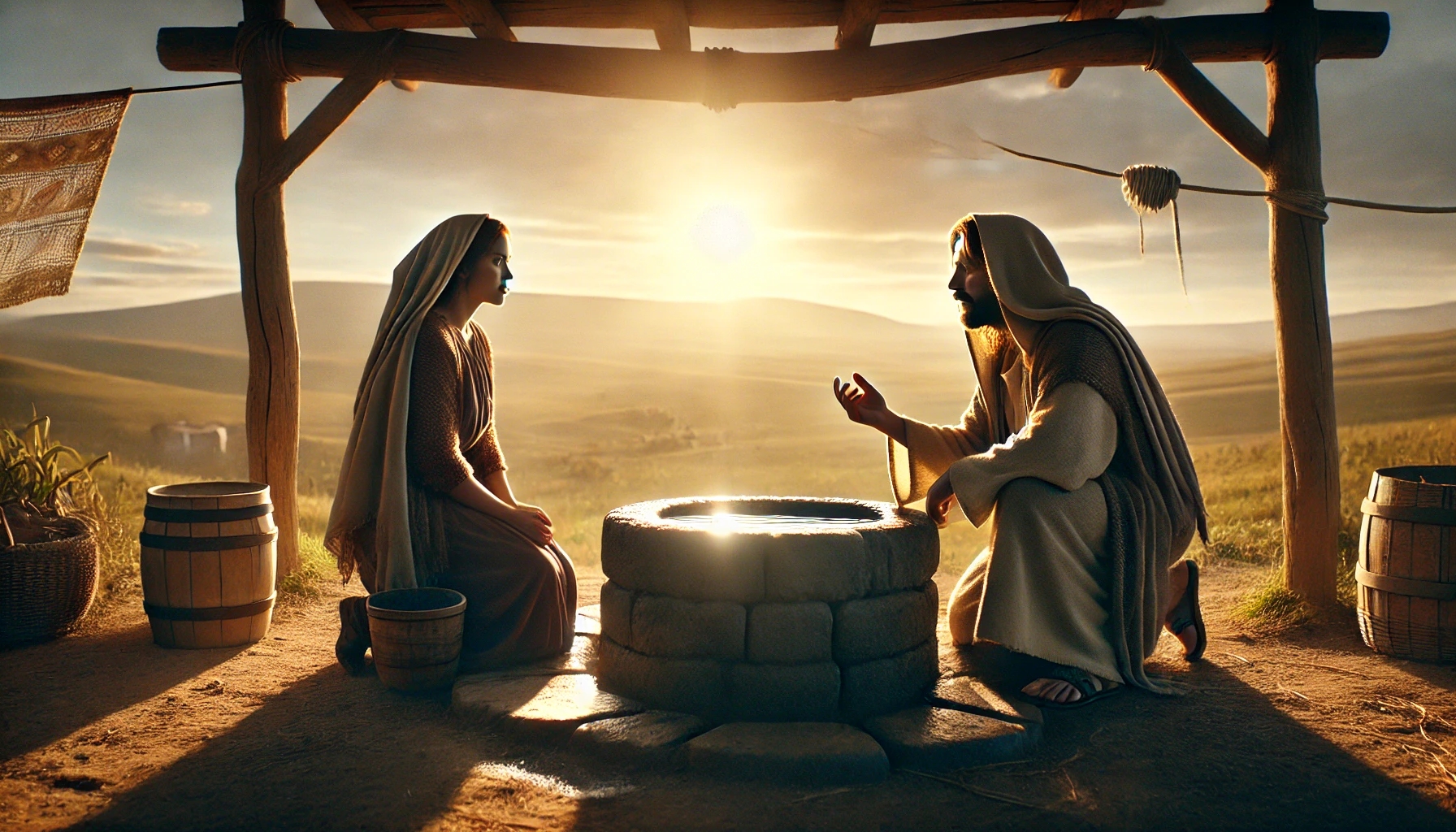
Read John 4:16–24. What does Jesus do to show this woman that He knows her innermost secrets, and how does she respond?
In John 4:16–24, Jesus brings the woman at the well into direct contact with the truth of her life by revealing her innermost secrets. When He asks her about her husband, He touches a sensitive point in her life, prompting her to recognize Him as a prophet. However, instead of further opening up to this truth, she tries to steer the conversation toward an old religious controversy—the proper place of worship. This attempt shows how people often avoid deeper self-awareness by diverting to familiar topics.
However, Jesus does not engage in the discussion about the place of worship but uses the opportunity to convey a greater truth: Worship is not an external ritual nor is it bound to a specific place. True worship occurs “in spirit and in truth.” Thus, Jesus calls the woman to go beyond cultural and religious boundaries and seek a deep, personal connection with God.
Through Jesus’ revelation that God is Spirit and that worship must be based on truthfulness and inner devotion, the woman understands that she needs more than just religious practices—she is invited to seek God in her own heart. This simple yet transformative truth prepares her to receive more and opens her heart to the living water that Jesus offers. Jesus’ response reminds us that true worship is not tied to external places or traditions but is rooted in an authentic and direct relationship with God.
Read John 4:25–26. How does Jesus reveal His identity to her?
In John 4:25–26, Jesus does something extraordinary: He reveals to a simple Samaritan woman that He is the Messiah—the clearest and most straightforward self-declaration of His identity in the Gospels before His arrest. He does not choose a large gathering or respected individuals but a woman who is considered an outsider in society and struggles with her past. This choice demonstrates Jesus’ love and appreciation for every individual, regardless of social status or background.
This encounter highlights that Jesus did not come only to impress large assemblies but also to reach those on the margins of society who feel lonely or worthless. Revealing His identity to this woman shows us that God meets us on the most personal level, where we often feel the most vulnerable and unrecognized.
By knowing her secrets and yet revealing His identity, Jesus not only gives her deeper self-awareness but also a clear reason to believe in Him. This encounter shows that true encounters with God often happen where we feel forgotten by the world, and that His love embraces and renews us in our deepest brokenness. Jesus’ revelation as the Messiah to this Samaritan woman reminds us that God’s grace and revelation are open to everyone—regardless of past, culture, or social standing.
What should this account teach us about why the Gospel must tear down the barriers we build between people?
This account of Jesus’ encounter with the Samaritan woman vividly shows us that the Gospel knows no cultural, social, or moral barriers. Jesus speaks with someone whom society views as an outsider—a Samaritan woman with a complicated life story. For many Jews of that time, a conversation with her would have been unthinkable. Yet Jesus overcomes these boundaries to bring her the message of salvation and renewal.
The Gospel requires tearing down barriers because God’s love and salvation are intended for every person, regardless of origin, social status, or past. When we judge and exclude people based on external standards, we hold back the transformative power of the Gospel and block others from accessing God. Jesus’ actions teach us that genuine love and the pursuit of unity in faith should transcend human prejudices.
This story calls us to become aware of our own prejudices and to dismantle them so that we can make room for the Gospel to truly build bridges. The Gospel itself is a call to reconciliation and to valuing every person as God’s beloved child. Tearing down barriers means living and proclaiming Jesus’ message of love and redemption in a way that reaches everyone—without conditions or reservations.

The encounter between Jesus and the Samaritan woman reminds us that God’s love and His message know no social or cultural boundaries. In our daily lives and faith journey, this story calls us to question our own prejudices and barriers and to be ready to meet the people around us with openness and empathy.
  1. Breaking the Limits of Acceptance: Just as Jesus overcomes the societal barriers between Jews and Samaritans, we are also called to overcome prejudices and divisions that separate us from others. Whether in school, the workplace, or the neighborhood—true love and acceptance should go beyond origin, status, or past. Jesus’ example teaches us that every person is valuable and that the Gospel is meant for everyone.
  2. Seeking Authentic Encounters: Jesus shows that true worship and encounter happen “in spirit and in truth.” In our own faith life, this means seeking God not only in external forms or specific places but experiencing Him in a deep, authentic relationship within us. Similarly, we can learn that encounters with other people should also be honest and without masks—without relying on superficial judgments or societal categories.
  3. God’s Love as a Foundation: Jesus reveals Himself to the woman as the Messiah—not to a privileged or respected person but to someone whom many see as an outsider. For us, this is a powerful reminder that God’s love is unconditional. This love should shape our interactions with others and strengthen our trust that God knows and accepts us, no matter where we are in our lives.
  4. The Gospel as a Bridge: The Gospel itself is a message of reconciliation and a call to unity. When we appreciate people in their diversity and break down prejudices, we create space where God’s love can work. This story encourages us to live out the Gospel by reaching out to people who think or live differently and opening ourselves up to genuine connection.
In daily life, Jesus’ encounter with the woman at the well shows us that love and healing begin when we become aware of our own prejudices and learn to see people through God’s eyes. This way, we can not only proclaim the Gospel but also make it alive through genuine relationships and community.


True strength is shown when we lay down prejudices and approach others with an open heart.

Source: https://fulfilleddesire.net/lesson-5-the-testimony-of-the-samaritans-5-4-the-revelation-of-jesus-themes-in-the-gospel-of-john-living-faith/

Share this:

  • Share on Facebook (Opens in new window) Facebook
  • Share on LinkedIn (Opens in new window) LinkedIn
  • Share on X (Opens in new window) X
  • Share on Pinterest (Opens in new window) Pinterest

Like this:

Like Loading…

Filed Under: Adventist Sermons & Video Clips, Fulfilled Desire

30.10.2024 – Acts Chapter 3 | BELIEVE HIS PROPHETS

October 29, 2024 By admin

October 30, 2024
DAILY BIBLE READING – Acts Chapter 3
1 Now Peter and John went up together into the temple at the hour of prayer, being the ninth hour.
2 And a certain man lame from his mother’s womb was carried, whom they laid daily at the gate of the temple which is called Beautiful, to ask alms of them that entered into the temple;
3 Who seeing Peter and John about to go into the temple asked an alms.
4 And Peter, fastening his eyes upon him with John, said, Look on us.
5 And he gave heed unto them, expecting to receive something of them.
6 Then Peter said, Silver and gold have I none; but such as I have give I thee: In the name of Jesus Christ of Nazareth rise up and walk.
7 And he took him by the right hand, and lifted him up: and immediately his feet and ankle bones received strength.
8 And he leaping up stood, and walked, and entered with them into the temple, walking, and leaping, and praising God.
9 And all the people saw him walking and praising God:
10 And they knew that it was he which sat for alms at the Beautiful gate of the temple: and they were filled with wonder and amazement at that which had happened unto him.
11 And as the lame man which was healed held Peter and John, all the people ran together unto them in the porch that is called Solomon’s, greatly wondering.
12 And when Peter saw it, he answered unto the people, Ye men of Israel, why marvel ye at this? or why look ye so earnestly on us, as though by our own power or holiness we had made this man to walk?
13 The God of Abraham, and of Isaac, and of Jacob, the God of our fathers, hath glorified his Son Jesus; whom ye delivered up, and denied him in the presence of Pilate, when he was determined to let him go.
14 But ye denied the Holy One and the Just, and desired a murderer to be granted unto you;
15 And killed the Prince of life, whom God hath raised from the dead; whereof we are witnesses.
16 And his name through faith in his name hath made this man strong, whom ye see and know: yea, the faith which is by him hath given him this perfect soundness in the presence of you all.
17 And now, brethren, I wot that through ignorance ye did it, as did also your rulers.
18 But those things, which God before had shewed by the mouth of all his prophets, that Christ should suffer, he hath so fulfilled.
19 Repent ye therefore, and be converted, that your sins may be blotted out, when the times of refreshing shall come from the presence of the Lord.
20 And he shall send Jesus Christ, which before was preached unto you:
21 Whom the heaven must receive until the times of restitution of all things, which God hath spoken by the mouth of all his holy prophets since the world began.
22 For Moses truly said unto the fathers, A prophet shall the Lord your God raise up unto you of your brethren, like unto me; him shall ye hear in all things whatsoever he shall say unto you.
23 And it shall come to pass, that every soul, which will not hear that prophet, shall be destroyed from among the people.
24 Yea, and all the prophets from Samuel and those that follow after, as many as have spoken, have likewise foretold of these days.
25 Ye are the children of the prophets, and of the covenant which God made with our fathers, saying unto Abraham, And in thy seed shall all the kindreds of the earth be blessed.
26 Unto you first God, having raised up his Son Jesus, sent him to bless you, in turning away every one of you from his iniquities.
King James Version. Public Domain


Commentary
Introduction
The Book of Acts, written by Luke, continues the narrative from the New Testament Gospel of Luke, documenting the spread of Christianity following the ascension of Jesus Christ. Chapter 3 of Acts marks a significant turning point in the early church by describing the first public miracle performed by the apostles Peter and John. This passage, known as the Healing of the Lame Man, illustrates not only the power of Jesus working through his disciples but also the growing tension between the emerging Christian community and the religious leaders in Jerusalem. The healing at the temple serves as a catalytic event, leading to intensified persecution and an expansion of the apostles’ missionary efforts.
Commentary
Verses 1–10: The Healing at the Temple
The scene opens at the ninth hour (3 PM), a time of prayer in the temple, as Peter and John gather to pray. The lame man, crippled from birth, sits daily at the “Beautiful Gate” (the temple’s entrance) and asks visitors for alms. His daily presence at the temple gate underscores his dependency and lowly social status as a beggar.
When he recognizes Peter and John, he asks for alms, but Peter responds in an unexpected way. Instead of money, Peter says, “Look at us!” — a call for a personal encounter and trust. Peter then explains that he does not have material wealth but offers healing in the name of Jesus Christ of Nazareth: “In the name of Jesus Christ of Nazareth, rise up and walk!” This declaration emphasizes the authority and spiritual power granted to the apostles.
The lame man is immediately healed, stands, walks, and accompanies them into the temple, praising God. This instantaneous healing, demonstrated through the man’s walking and leaping, attests to the reality of miraculous works through the apostles. This miracle not only represents physical healing but also signifies spiritual liberation and the arrival of God’s Kingdom.
Verses 11–26: Peter’s Sermon to the Crowd
People who recognize the formerly lame man are astonished and shocked by what has happened. Observing their wonder, Peter seizes the moment to deliver a powerful sermon.
Peter begins by acknowledging the crowd’s amazement and redirects their attention from the apostles’ own power to God, saying, “Men of Israel, why do you marvel at this?” He clarifies that the healing was not by human strength but through the power of God. Peter references the glorification of Jesus, whom the leaders had handed over to Pilate and denied.
Peter condemns the rejection of the Holy and Righteous One, identifying Jesus as the “Prince of Life” whom God raised from the dead. This declaration underscores Jesus’s divine nature and role as Redeemer. Peter emphasizes that faith in Jesus’s name is the source of healing, highlighting the miracle’s spiritual significance.
Peter then calls the crowd to repentance, saying, “Repent, therefore, and be converted, that your sins may be blotted out.” He references Moses’s prophetic words, stressing the need to listen to the prophets. The call to repentance and the announcement of Jesus’s return connect the lame man’s healing to the Christian eschatological hope.
Theological Implications
The healing of the lame man symbolizes the holistic healing that the Gospel brings—physically, spiritually, and socially. It demonstrates the fulfillment of Old Testament prophecies and affirms the apostles as legitimate leaders of the church. Emphasizing Jesus’s name and faith as the means of healing highlights Jesus’s central role in God’s redemptive plan.
Peter’s sermon links the miracle to the necessity of repentance and the acknowledgment of Jesus as the Messiah, establishing a clear distinction between the old religious system and the new Christian faith. Acts 3 thus reveals the power of the Gospel and the transformative impact of faith on individuals and communities.
Summary
Acts Chapter 3 describes the remarkable healing of a man lame from birth by Peter and John at the “Beautiful Gate” of the temple. This miraculous act draws the attention of the Jerusalem crowd and leads to a public sermon by Peter. In his message, Peter emphasizes that the healing occurred not by human strength but through the power of Jesus Christ, whom they had denied. He calls the audience to repentance to receive forgiveness for their sins and points to the fulfillment of Old Testament prophecies through Jesus’s life, death, and resurrection. The healing of the lame man and the subsequent sermon mark a pivotal moment in the spread of early Christianity, affirming the apostles’ divine authority and presenting the Gospel’s message to a wider audience.


WEEKLY SPIRIT OF PROPHECY READING – Ellen White | The Desire of Ages
Chapter 73—“Let Not Your Heart Be Troubled”
This chapter is based on John 13:31-38; John 14; John 15; John 16; John 17.
Read online here


Commentary
Introduction:
Chapter 73 depicts the deep, moving words that Jesus gave to His disciples before His arrest and death. These sections of Scripture are particularly significant because Jesus prepares His disciples for the impending separation and encourages them not to despair despite the forthcoming difficulties. He emphasizes the necessity of faith in Him and in God and speaks about the importance of the Holy Spirit as a Comforter. The connection between the disciples and Jesus is highlighted as a vital component of the Christian faith, which remains relevant even today.
Commentary:
This chapter especially reveals the intimate relationship between Jesus and His disciples. Despite the sadness over His impending absence, Jesus strives to comfort them and provide them with a perspective of hope. He reveals the central significance of His sacrifice and emphasizes that His departure is not the end but the beginning of a new phase of their mission. The promise of the Holy Spirit shows that they will never be alone, even though He will no longer be physically with them. It is also interesting that Jesus highlights the importance of love and obedience. Love for God and for one another is emphasized as a sign of discipleship. This inner connection between love, faith, and obedience is a key to understanding and living out Christian discipleship.
Summary:
Chapter 73 describes the final moments that Jesus spent with His disciples before His arrest. He promises them that they will not remain alone but will receive the Holy Spirit as a Comforter. Jesus’ words emphasize the necessity of remaining in Him and obtaining eternal life through Him. Through the Holy Spirit, the disciples are empowered to continue Jesus’ work, accomplish greater things, and live in unity with one another. The chapter highlights the importance of faith, love, and obedience, which are necessary to remain connected to Christ. The message is timeless: even in difficult times, believers should trust in the Holy Spirit and be guided by the love and word of Christ.

Source: https://fulfilleddesire.net/30-10-2024-acts-chapter-3-believe-his-prophets/

Share this:

  • Share on Facebook (Opens in new window) Facebook
  • Share on LinkedIn (Opens in new window) LinkedIn
  • Share on X (Opens in new window) X
  • Share on Pinterest (Opens in new window) Pinterest

Like this:

Like Loading…

Filed Under: Adventist Sermons & Video Clips, Fulfilled Desire

Lesson 5.The Testimony of the Samaritans | 5.3 “Sir, Give Me This Water” | THEMES IN THE GOSPEL OF JOHN | LIVING FAITH

October 28, 2024 By admin

5.3 “Sir, Give Me This Water”
Living Water: From Physical Need to Spiritual Healing
To what extent does Ezekiel 36:25–27 reflect the truth that Jesus wanted to convey to Nicodemus and the woman at the well?
Ezekiel 36:25–27 describes God’s promise of inner renewal: He will cleanse His people, give them a new heart and a new spirit, and enable them to walk in His ways. This promise reflects the profound truth that Jesus intended to convey to both Nicodemus and the woman at the well—the necessity of spiritual transformation and a new life that flows from a direct connection to God.
Like Nicodemus, the woman at the well struggled to understand Jesus’ words in a spiritual sense. Both initially thought on a worldly level: Nicodemus took rebirth literally as a return to the womb, and the woman imagined that the “living water” could free her from the daily trip to the well. However, Jesus’ message went far beyond that. He spoke not only of an external fulfillment but of an internal one—a source of life that flows in the soul and never runs dry.
Her request, “Lord, give me this water,” shows us a deep need for renewal and redemption that exists within every person. Even though the woman did not initially fully understand what Jesus was offering, she felt that His words contained a solution for her inner thirst—a fulfillment that goes beyond physical needs.
Just as God promises a new heart and a new spirit in Ezekiel, Jesus shows that the living water—the Spirit of God—can become a source of eternal life in every person. This inner transformation, which fills us with new strength and a “fleshly heart,” is still an invitation to us today. Jesus’ words remind us that true peace and true fulfillment are only possible through a close relationship with God and the presence of His Spirit.
Read John 4:16. How did Jesus respond to the woman’s request?
When the woman asked for the “living water,” Jesus suddenly changed the subject and asked her to call her husband. This sudden shift shows that Jesus looked beyond the outer words and knew the woman’s heart. He knew that she was seeking healing and renewal, but that she first needed to honestly acknowledge her life situation and inner wounds.
By asking her to bring her husband, Jesus touched a hidden area of her life. This request was not a condemnation but an invitation to self-reflection. To truly receive the renewal and the “living water,” she had to face her reality and acknowledge her needs and faults. Ellen White writes that she needed to “recognize her sin and her Redeemer” before she could receive the gift of living water (SDL 168).
Jesus’ approach reminds us that spiritual healing often begins with confronting ourselves and honestly recognizing our challenges, faults, and inner struggles. By addressing her situation, Jesus demonstrated His deep insight and love, as He did not condemn her but gently led her on the path to healing. His actions teach us that true spiritual growth and renewal often lie in the willingness to face our inner barriers and approach God with openness and honesty.
The encounter between Jesus and the woman at the well, and His invitation to receive the “living water,” also speaks to a deep spiritual truth in our daily lives. The promise of a “new heart” and “living water” shows that true renewal and fulfillment flow from an authentic connection to God and that this begins with inner honesty.
  1. Renewal and Self-Recognition: The woman at the well had to honestly examine her life situation and challenges to accept Jesus’ offer of healing and renewal. Similarly, in our lives, we often need to confront the hidden areas of our hearts—whether they are insecurities, fears, or unresolved problems. When we are willing to bring these areas before God, His healing power can work where we need renewal the most.
  2. Inner Thirst for Meaning and Fulfillment: In daily life, we often feel an inner emptiness or dissatisfaction that worldly things alone cannot satisfy. Jesus’ offer of the “living water” reminds us that this thirst for peace, joy, and meaning can only be quenched in a relationship with Him. Instead of seeking fulfillment in external things, we are invited to continually turn to God and experience new strength and inner satisfaction through Him.
  3. Transformation by the Spirit of God: Just as God promises a new heart and a new spirit in Ezekiel, we also experience, in our faith journey, that God wants to transform us from within through the Holy Spirit. This transformation is not a one-time event but a continuous process that strengthens us, solidifies our values, and helps us lead a life in harmony with God’s ways.
  4. Courage for Honesty: Jesus’ request for the woman to bring her husband was an invitation to honesty, which is a prerequisite for healing. Developing this honesty with ourselves and with God can be challenging but is crucial for spiritual growth. When we are willing to honestly reflect and acknowledge our weaknesses and needs, we create space for God’s healing work in our lives.
In daily life, this means regularly taking time for reflection and prayer to entrust our inner struggles to God and seek His healing presence. Jesus’ words to the woman at the well remind us that renewal and true living water are always available when we approach Him with openness and trust.

An open heart and an honest prayer can be the beginning of true renewal.

Source: https://fulfilleddesire.net/lesson-5-the-testimony-of-the-samaritans-5-3-sir-give-me-this-water-themes-in-the-gospel-of-john-living-faith/

Share this:

  • Share on Facebook (Opens in new window) Facebook
  • Share on LinkedIn (Opens in new window) LinkedIn
  • Share on X (Opens in new window) X
  • Share on Pinterest (Opens in new window) Pinterest

Like this:

Like Loading…

Filed Under: Adventist Sermons & Video Clips, Fulfilled Desire

29.10.2024 – Acts Chapter 2 | BELIEVE HIS PROPHETS

October 28, 2024 By admin

October 29, 2024
DAILY BIBLE READING – Acts Chapter 2
1 And when the day of Pentecost was fully come, they were all with one accord in one place.
2 And suddenly there came a sound from heaven as of a rushing mighty wind, and it filled all the house where they were sitting.
3 And there appeared unto them cloven tongues like as of fire, and it sat upon each of them.
4 And they were all filled with the Holy Ghost, and began to speak with other tongues, as the Spirit gave them utterance.
5 And there were dwelling at Jerusalem Jews, devout men, out of every nation under heaven.
6 Now when this was noised abroad, the multitude came together, and were confounded, because that every man heard them speak in his own language.
7 And they were all amazed and marvelled, saying one to another, Behold, are not all these which speak Galilaeans?
8 And how hear we every man in our own tongue, wherein we were born?
9 Parthians, and Medes, and Elamites, and the dwellers in Mesopotamia, and in Judaea, and Cappadocia, in Pontus, and Asia,
10 Phrygia, and Pamphylia, in Egypt, and in the parts of Libya about Cyrene, and strangers of Rome, Jews and proselytes,
11 Cretes and Arabians, we do hear them speak in our tongues the wonderful works of God.
12 And they were all amazed, and were in doubt, saying one to another, What meaneth this?
13 Others mocking said, These men are full of new wine.
14 But Peter, standing up with the eleven, lifted up his voice, and said unto them, Ye men of Judaea, and all ye that dwell at Jerusalem, be this known unto you, and hearken to my words:
15 For these are not drunken, as ye suppose, seeing it is but the third hour of the day.
16 But this is that which was spoken by the prophet Joel;
17 And it shall come to pass in the last days, saith God, I will pour out of my Spirit upon all flesh: and your sons and your daughters shall prophesy, and your young men shall see visions, and your old men shall dream dreams:
18 And on my servants and on my handmaidens I will pour out in those days of my Spirit; and they shall prophesy:
19 And I will shew wonders in heaven above, and signs in the earth beneath; blood, and fire, and vapour of smoke:
20 The sun shall be turned into darkness, and the moon into blood, before the great and notable day of the Lord come:
21 And it shall come to pass, that whosoever shall call on the name of the Lord shall be saved.
22 Ye men of Israel, hear these words; Jesus of Nazareth, a man approved of God among you by miracles and wonders and signs, which God did by him in the midst of you, as ye yourselves also know:
23 Him, being delivered by the determinate counsel and foreknowledge of God, ye have taken, and by wicked hands have crucified and slain:
24 Whom God hath raised up, having loosed the pains of death: because it was not possible that he should be holden of it.
25 For David speaketh concerning him, I foresaw the Lord always before my face, for he is on my right hand, that I should not be moved:
26 Therefore did my heart rejoice, and my tongue was glad; moreover also my flesh shall rest in hope:
27 Because thou wilt not leave my soul in hell, neither wilt thou suffer thine Holy One to see corruption.
28 Thou hast made known to me the ways of life; thou shalt make me full of joy with thy countenance.
29 Men and brethren, let me freely speak unto you of the patriarch David, that he is both dead and buried, and his sepulchre is with us unto this day.
30 Therefore being a prophet, and knowing that God had sworn with an oath to him, that of the fruit of his loins, according to the flesh, he would raise up Christ to sit on his throne;
31 He seeing this before spake of the resurrection of Christ, that his soul was not left in hell, neither his flesh did see corruption.
32 This Jesus hath God raised up, whereof we all are witnesses.
33 Therefore being by the right hand of God exalted, and having received of the Father the promise of the Holy Ghost, he hath shed forth this, which ye now see and hear.
34 For David is not ascended into the heavens: but he saith himself, The Lord said unto my Lord, Sit thou on my right hand,
35 Until I make thy foes thy footstool.
36 Therefore let all the house of Israel know assuredly, that God hath made the same Jesus, whom ye have crucified, both Lord and Christ.
37 Now when they heard this, they were pricked in their heart, and said unto Peter and to the rest of the apostles, Men and brethren, what shall we do?
38 Then Peter said unto them, Repent, and be baptized every one of you in the name of Jesus Christ for the remission of sins, and ye shall receive the gift of the Holy Ghost.
39 For the promise is unto you, and to your children, and to all that are afar off, even as many as the Lord our God shall call.
40 And with many other words did he testify and exhort, saying, Save yourselves from this untoward generation.
41 Then they that gladly received his word were baptized: and the same day there were added unto them about three thousand souls.
42 And they continued stedfastly in the apostles’ doctrine and fellowship, and in breaking of bread, and in prayers.
43 And fear came upon every soul: and many wonders and signs were done by the apostles.
44 And all that believed were together, and had all things common;
45 And sold their possessions and goods, and parted them to all men, as every man had need.
46 And they, continuing daily with one accord in the temple, and breaking bread from house to house, did eat their meat with gladness and singleness of heart,
47 Praising God, and having favour with all the people. And the Lord added to the church daily such as should be saved.
King James Version. Public Domain


Commentary
Introduction:
The second chapter of the Acts of the Apostles narrates one of the most significant events in early Christianity: the miracle of Pentecost. Pentecost becomes the birth of the Christian community when the Holy Spirit descends upon the gathered disciples, empowering them to proclaim the Gospel in various languages. This event is so astounding that a large crowd from different nations gathers to witness the power of the Spirit. Peter boldly steps forward as the speaker and explains to the assembled people the significance of Jesus’ life, death, and resurrection. This sermon and the powerful outpouring of the Spirit mark the beginning of a completely new community of believers – the first Christian church. The events in this chapter show that God’s Spirit is alive and active in the world, uniting all people who turn to Him in faith.
Commentary:
The Pentecost event in Acts 2 is significant and foundational for understanding the Christian community and the work of the Holy Spirit in multiple ways. The apostles and disciples had gathered in Jerusalem, and when the Spirit descended, He not only filled them personally but collectively empowered them to proclaim the Gospel. This demonstrates that the Spirit strengthens not only individual relationships with God but also binds the community of believers together and equips them to spread the message.
The sound of the wind and the tongues of fire that rest on the gathered people are powerful symbols of God’s presence and power. In the Old Testament, fire often symbolizes God’s holiness and purifying power, while the wind represents God’s life-giving breath. The fact that all present are empowered by the Spirit to speak in various languages shows that God’s message transcends all cultural and linguistic barriers. This “speaking in tongues” does not serve to confuse but to reveal, allowing the listeners to hear “the mighty works of God” in their own languages. This serves as a symbolic reversal of the Tower of Babel’s language confusion and reveals that God’s Spirit brings unity within diversity.
Peter steps forward with the eleven other apostles and preaches with new, Spirit-filled conviction. His words are not only explanatory but also prophetic. He quotes the prophet Joel to show that the Spirit’s work fulfills God’s promise. This prophetic outpouring of the Spirit includes all believers, regardless of age, gender, or social status. This is a revolutionary idea that establishes the church as an inclusive community of all believers.
Peter directly calls the audience to account for Jesus’ fate. He addresses the crucifixion and resurrection of Jesus, explaining that God has made this Jesus both “Lord and Christ.” This clear proclamation of Jesus’ resurrection and authority deeply moves the listeners. They ask, “What shall we do?” Peter responds by calling them to repentance and baptism in the name of Jesus Christ. Here, baptism becomes a sign of entering into the community of believers and a prerequisite for receiving the Spirit.
The second part of this chapter describes the formation and structure of the first Christian community. This community is characterized by shared life, teaching, breaking of bread, and prayer. The believers share their possessions, help one another, and spend much time together. The generosity and unity of this first community strongly contrast with the surrounding society’s self-centeredness and social isolation. A picture of community emerges, shaped by God’s Spirit, which serves as a model for Christian communities today.
The Pentecost event in Acts 2 is portrayed not merely as a one-time historical event but as the beginning of the Spirit’s ongoing work. The Spirit’s power manifests not only in miracles and signs but especially in the unity and dedication of the community. Pentecost marks a turning point when the Gospel goes out to all people, a dynamic community of faith emerges, and God’s Spirit continually works to strengthen faith and create community. The daily addition of believers to the community shows that the Spirit works in people’s hearts, drawing them to repentance and faith in Christ.
Summary:
Acts Chapter 2 describes the descent of the Holy Spirit on Pentecost and its transformative impact on the disciples and the listeners. The Spirit fills the apostles and enables them to speak in various languages so that people from different nations can hear the message. Peter delivers a powerful sermon, calling the people to repentance and baptism, which leads to the formation of the first Christian community. This community lives in unity, shares their possessions, and remains steadfast in the apostles’ teaching, breaking of bread, and prayer. The Pentecost event marks the beginning of a new era of faith, where God’s Spirit unites people across all cultural boundaries and calls them to live as witnesses of the Gospel.


WEEKLY SPIRIT OF PROPHECY READING – Ellen White | The Desire of Ages
Chapter 73—“Let Not Your Heart Be Troubled”
This chapter is based on John 13:31-38; John 14; John 15; John 16; John 17.
Read online here


Commentary
Introduction:
Chapter 73 depicts the deep, moving words that Jesus gave to His disciples before His arrest and death. These sections of Scripture are particularly significant because Jesus prepares His disciples for the impending separation and encourages them not to despair despite the forthcoming difficulties. He emphasizes the necessity of faith in Him and in God and speaks about the importance of the Holy Spirit as a Comforter. The connection between the disciples and Jesus is highlighted as a vital component of the Christian faith, which remains relevant even today.
Commentary:
This chapter especially reveals the intimate relationship between Jesus and His disciples. Despite the sadness over His impending absence, Jesus strives to comfort them and provide them with a perspective of hope. He reveals the central significance of His sacrifice and emphasizes that His departure is not the end but the beginning of a new phase of their mission. The promise of the Holy Spirit shows that they will never be alone, even though He will no longer be physically with them. It is also interesting that Jesus highlights the importance of love and obedience. Love for God and for one another is emphasized as a sign of discipleship. This inner connection between love, faith, and obedience is a key to understanding and living out Christian discipleship.
Summary:
Chapter 73 describes the final moments that Jesus spent with His disciples before His arrest. He promises them that they will not remain alone but will receive the Holy Spirit as a Comforter. Jesus’ words emphasize the necessity of remaining in Him and obtaining eternal life through Him. Through the Holy Spirit, the disciples are empowered to continue Jesus’ work, accomplish greater things, and live in unity with one another. The chapter highlights the importance of faith, love, and obedience, which are necessary to remain connected to Christ. The message is timeless: even in difficult times, believers should trust in the Holy Spirit and be guided by the love and word of Christ.

Source: https://fulfilleddesire.net/29-10-2024-acts-chapter-2-believe-his-prophets/

Share this:

  • Share on Facebook (Opens in new window) Facebook
  • Share on LinkedIn (Opens in new window) LinkedIn
  • Share on X (Opens in new window) X
  • Share on Pinterest (Opens in new window) Pinterest

Like this:

Like Loading…

Filed Under: Adventist Sermons & Video Clips, Fulfilled Desire

Lesson 5.The Testimony of the Samaritans | 5.2 The Woman at the Well | THEMES IN THE GOSPEL OF JOHN | LIVING FAITH

October 27, 2024 By admin

5.2 The Woman at the Well
Living Water: Jesus’ Invitation to Inner Renewal
Read John 4:7–15. How did Jesus use this encounter to testify to this woman?
In John 4:7–15, Jesus uses His encounter with the woman at the well in a remarkable way to bear witness to her and lead her to a deeper truth. Despite the long history of hostility between Jews and Samaritans, Jesus deliberately and empathetically approached this woman. Instead of immediately doing something for her, He asked her for a favor, which was a compassionate and wise strategy to build trust. This gesture, as Ellen White describes, awakened a sense of openness in her, as trust is often elicited through trust (see SDL 166).
Jesus saw in her a person who was not only physically but also spiritually thirsty, and so He offered her the “living water” that only God can provide. Her initial reaction was skeptical and earthbound, similar to Nicodemus, who asked how a rebirth was possible. In both cases, Jesus highlighted the necessity of an inner transformation and made it clear that conversion and a connection to God bring the deepest fulfillment for the soul.
Jesus’ approach teaches us that true testimony lies not only in the message but also in the manner of the encounter. His sensitivity to the heart of His counterpart and His respectful addressing of her questions opened the space for a deeper conversation. In this way, He demonstrated that the Gospel is not only conveyed but also lived through listening, empathy, and trust.
What is the Old Testament background of Jesus’ statement about living water (Jeremiah 2:13; Zechariah 14:8)?
Jesus’ statement about “living water” has deep roots in the Old Testament understanding of water as a symbol of life and God’s refreshing presence. In Jeremiah 2:13, God refers to Himself as the “source of living water,” and the people of Israel are criticized for abandoning this source and relying instead on “broken cisterns”—a metaphor for worldly dependencies that ultimately remain empty. This image makes it clear that only God is the true source of life and fulfillment, while human efforts without Him are barren.
Zechariah 14:8 describes a future vision where “living waters” flow from Jerusalem, representing the life-giving and healing presence of God that spreads across the entire earth. This promise of living water shows God’s intention to refresh and renew His people not only physically but also spiritually.
By referencing this image in John 4:14, Jesus reveals Himself as the source of eternal life. He offers the Samaritan woman and all people what, in the deepest sense, grants life and quenches the thirst of the soul—a lasting, renewing connection to God. Thus, the living water Jesus speaks of points to a life in abundance that is only possible through a relationship with Him. The image of water is not merely a symbol but a promise that those who believe in Jesus will never thirst internally again but will carry a constant source of life within them.
Read John 7:37–38. What does Jesus say to us in these verses and how do we experience what He promises here?
In John 7:37–38, Jesus speaks on the last day of the festival and declares, “If anyone is thirsty, let them come to me and drink. Whoever believes in me, as Scripture has said, rivers of living water will flow from within them.” With this powerful image, Jesus invites people to satisfy their spiritual thirst in Him. The promise of “living water” points to the life-giving and renewing power that faith in Jesus can have within us.
What does this mean for us today and how do we experience it?
  1. Fulfillment and Satisfaction: Jesus speaks to the deepest needs of the human soul. In faith in Him, we find fulfillment that satisfies the longings of our hearts and grants us inner peace. This inner source acts like “living water” within us, refreshing us not only temporarily but providing lasting satisfaction.
  2. Transformation through the Holy Spirit: The “rivers of living water” also refer to the work of the Holy Spirit, who would come to believers after Jesus’ resurrection (John 7:39). Through the Holy Spirit, we experience a profound transformation of our lives. He strengthens us, comforts us, and gives us the power to live out our faith daily and share it with others.
  3. Testimony and Sharing: Jesus promises not only that we will be internally fulfilled but also that this “living water” will flow through us to others. When we drink from the source that Jesus Himself is, we have the opportunity to reach others with this divine power and love. Our lives can become a testimony to God’s love and a blessing to others.
In our daily lives, we experience what Jesus promises here through a consistent relationship with Him and the work of the Holy Spirit. By growing in prayer, Bible reading, and fellowship with other believers, this power flows within us and through us to others.
The encounter between Jesus and the woman at the well teaches us how our faith can work in everyday life and supply us with spiritual strength. Jesus’ image of “living water” is an invitation to continually connect with God’s refreshing presence and thus experience inner fulfillment.
  1. The Source of Fulfillment: In our hectic daily lives, many seek meaning, joy, and fulfillment. Often, material or fleeting things distract us, yet they cannot quench this thirst. Jesus teaches us that true peace and joy lie only in a connection with Him. His invitation to receive the “living water” is a call to regularly find rest in Him so that our souls may be renewed.
  2. Transformation through the Holy Spirit: The power of the “living water” becomes tangible through the Holy Spirit, who encourages us in difficult times and helps us remain faithful. By seeking God daily—through prayer, Bible reading, and silence—we allow the Spirit to transform us and provide a new perspective for our lives.
  3. Our Faith as a Blessing to Others: Jesus promised that the “living water” can flow through us to others. Our relationship with God should not only strengthen us but also be evident in our environment. In everyday life, we can be a testimony reflecting God’s love through patience, helpfulness, and understanding. Thus, our lives become a living source for others who are also seeking fulfillment.
In practical daily terms, this means regularly “refueling” in Jesus, aligning our lives with Him, and using this spiritual power to be a blessing to others. The encounter with Jesus and His “living water” remind us that faith is not only a personal fulfillment but also a power that flows into our daily lives and impacts the world around us.

Sometimes, it only takes a moment of silence to find the source of inner peace.

Source: https://fulfilleddesire.net/lesson-5-the-testimony-of-the-samaritans-5-2-the-woman-at-the-well-themes-in-the-gospel-of-john-living-faith/

Share this:

  • Share on Facebook (Opens in new window) Facebook
  • Share on LinkedIn (Opens in new window) LinkedIn
  • Share on X (Opens in new window) X
  • Share on Pinterest (Opens in new window) Pinterest

Like this:

Like Loading…

Filed Under: Adventist Sermons & Video Clips, Fulfilled Desire

  • « Previous Page
  • 1
  • …
  • 197
  • 198
  • 199
  • 200
  • 201
  • …
  • 749
  • Next Page »

Hi-D Pure Vitamin D!

Hi-D Mushroom Vitamin D Capsules

Intercer Ministry – Since 1997!

We’re on Pinterest!

Partners


The Seven Thunders Ministry

Recent Posts

  • 11: Stewardship and Mission — Singing with Inspiration
  • UPDATE: ‘A Second Chance at Life’: Leah Stewart Continues Recovery After Shark Attack
  • 🌱 Quando sembra che nulla stia cambiando, può essere difficile continuare a sperare.
  • Want to Understand Yourself? Study the Artist
  • División Interamericana lanza OneVoice27, iniciativa que busca movilizar a toda la iglesia hacia 2027

About Intercer

Intercer is a website with biblical materials in Romanian, English, Hungarian and other languages. We want to bring the light from God's Word to peoples homes. Intercer provides quality Christian resources...[Read More]

Lucian Web Service


Intercer is proudly sponsored by Lucian Web Service - Professional Web Services, Wordpress Websites, Marketing and Affiliate Info. Lucian worked as a subcontractor with Simpleupdates, being one of the programmers for the Adventist Church Connect software. He also presented ACC/ASC workshops... [read more]

Archives

Follow @intercer

Categories

[footer_backtotop]

Website provided by: Intercer Romania · Intercer Canada · Lucian Web Service · Privacy · Log in


%d