• Home
  • Devotionals
  • BiblePhone
  • Blogs
  • TV
  • Prayer
    • Submit Prayer Request
    • Prayer Requests List
  • Contact us
  • Romanian

Intercer Adventist News

Closer To Heaven

  • About us
    • About Adventist Church
    • About Intercer Adventist News
    • About Intercer
    • About Lucian Web Service
    • Latest News
    • Romanian Church News
  • News and Feeds
    • Intercer Adventist News
    • 60 Second SlideShows
    • “Adventist Tweets” Paper
    • Adventists on Twitter
    • Adventists on Google Plus
    • Bible Resources
      • Adventist Universities Daily Bible
      • Answers For Me
        • Dear God
        • Healthy Living
        • Life Notes
        • Spiritual applications
        • Vegetarian recipes
      • Better Sermons
        • Spirit Renew Quotes
      • Daily Bible Promise
      • E-GraceNotes
        • Bible Says
        • City Lights
        • Family First
        • Staying Young
      • Story Harvest
        • Personal Stories
      • SSNet.org
    • Churches & Organizations
      • Adventist News Network
      • Adventist Review
      • Adventist World Radio
      • Avondale College
      • Babcock University Nigeria
      • BC Alive
      • British Union Conference
      • Canadian Adventist Messenger
      • Canadian Union
      • North American Division News
      • Outlook Magazine
      • PM Church – Pastor’s Blog
      • Potomac Conference
      • Record Magazine – Australia
      • Review and Herald
      • Trans-European Division
      • Washington Conference
    • Health
      • Dr.Gily.com
      • Vegetarian-Nutrition.info
    • Ministries
      • 7 Miracle (Youth)
      • A Sabbath Blog
      • Adventist Blogs
      • Adventist Today
      • ADvindicate
      • Creative Ministry
      • Grace Roots
      • Romanian Church News
      • Rose’s Devotional
      • UNashamed
    • Personal
      • Alexandra Yeboah
      • Iasmin Balaj
      • Jennifer LaMountain
      • McQue’s View
      • Refresh with Tia
      • Shawn Boonstra
  • Sermons & Video Clips
    • Churches
      • Downey Adventist Church
      • Fresno Central SDA Church
      • Hillsboro Adventist Church
      • Mississauga SDA Church
      • New Perceptions Television (PM Church)
      • Normandie Ave SDA Church
      • Remnant Adventist Church
    • Organizations
      • Adventist News Network (ANN)
      • ADRA Canada
      • Adventists About Life
      • Adventist Education
      • Adventist Mission
      • Amazing Facts
      • Adventist Church Connect
      • BC Adventist
      • Church Support Services
      • In Focus (South Pacific)
      • IIW Canada
      • NAD Adventist
      • NAD Church Resource Center (Vervent)
      • NARLA
      • Newbold
      • Review & Herald
      • SECMedia
      • Video Avventista (Italy)
    • Ministries
      • 3AngelsTube.com
      • Answered.TV
      • AudioVerse.org
      • AYO Connect
      • Christian Documentaries
      • GAiN #AdventistGeeks
      • GYC
      • Intercer Websites
      • Josue Sanchez
      • LightChannel
      • Pan de Vida
      • Revival and Reformation
      • Stories of Faith
      • SAU Journalism/Communication
      • Spirit Flash
      • The Preaching Place (UK)
      • Toronto East Youth Nation
    • Personal
      • Esther-Marie Hartwell
      • McQuesView
      • Pastor Manny Cruz
    • Sabbath School
      • Ecole du Sabbat Adventiste
      • Sabbath School Audio Podast
      • Sabbath School daily
  • Resources
    • Bible and Bible Studies
    • Health
    • Music
  • All articles
  • G+ News & Marketplace
    • G+ News & Marketplace Group
    • G+ Page
You are here: Home / Archives for Adventist Sermons & Video Clips / Fulfilled Desire

28.10.2024 – Acts Chapter 1 | BELIEVE HIS PROPHETS

October 27, 2024 By admin

The Message of the Book of Acts
The biblical book of Acts tells the story of the early Christians and the formation of the church. It provides an account of the period immediately after Jesus’ resurrection and ascension, up until the Apostle Paul’s journey to Rome. The main message of Acts encompasses several central themes:
The Spread of the Gospel
Acts demonstrates how the message of Jesus Christ spread beyond Jerusalem—first to Judea and Samaria, and then to the entire known world. Jesus’ words in the first chapter summarize this mission: “You will be my witnesses in Jerusalem and in all Judea and Samaria and to the ends of the earth” (Acts 1:8). This illustrates that the gospel is universal and reaches all people.
The Work of the Holy Spirit
A central theme in Acts is the work of the Holy Spirit, who empowers the disciples to proclaim the gospel courageously. At Pentecost (Acts 2), the Holy Spirit is poured out on the apostles, giving them strength and courage. The Holy Spirit is portrayed as the driving force that guides the church and empowers believers to bear witness.
Community and Unity in the Church
The early Christians lived in close community, sharing everything and caring for one another. Acts shows the importance of love and mutual support for the growth and stability of the church. This model of community reveals that the church is not just an institution but a living organism where believers care for each other (Acts 2:42-47).
Witness and Courage in the Face of Persecution
Acts documents how the early Christians faced persecution but remained faithful and continued to spread the gospel. Despite opposition from religious and political authorities, the apostles—especially Peter and Paul—show an unwavering faith and courage. This encourages Christians to stand firm in their faith, even in difficult times.
Inclusion of Gentiles in the Church
Another significant theme is the inclusion of Gentiles (non-Jews) in the church, marking a milestone in early church history. Acts describes how God leads Peter, and later Paul, to bring the message to the Gentiles as well (e.g., Cornelius’ conversion in Acts 10). This shows that God’s love and grace are for all people, regardless of origin or culture.
The Leadership Role of Peter and Paul
Peter and Paul are central figures in Acts as key leaders of the early church. While Peter initially brings the message to the Jews, Paul later becomes known as the “apostle to the Gentiles” and plays a crucial role in spreading the gospel throughout the Roman Empire. Their works and sermons illustrate that God can use people, despite their weaknesses, to accomplish great things.
Summary of the Message
Acts is a powerful testimony to God’s work through the Holy Spirit in founding and spreading the church. It demonstrates the power of faith and the transformative impact of the gospel. The book calls Christians to be bold and faithful, to nurture unity and community, and to bring the gospel to all people.
October 28, 2024
DAILY BIBLE READING – Acts Chapter 1
1 The former treatise have I made, O Theophilus, of all that Jesus began both to do and teach,
2 Until the day in which he was taken up, after that he through the Holy Ghost had given commandments unto the apostles whom he had chosen:
3 To whom also he shewed himself alive after his passion by many infallible proofs, being seen of them forty days, and speaking of the things pertaining to the kingdom of God:
4 And, being assembled together with them, commanded them that they should not depart from Jerusalem, but wait for the promise of the Father, which, saith he, ye have heard of me.
5 For John truly baptized with water; but ye shall be baptized with the Holy Ghost not many days hence.
6 When they therefore were come together, they asked of him, saying, Lord, wilt thou at this time restore again the kingdom to Israel?
7 And he said unto them, It is not for you to know the times or the seasons, which the Father hath put in his own power.
8 But ye shall receive power, after that the Holy Ghost is come upon you: and ye shall be witnesses unto me both in Jerusalem, and in all Judaea, and in Samaria, and unto the uttermost part of the earth.
9 And when he had spoken these things, while they beheld, he was taken up; and a cloud received him out of their sight.
10 And while they looked stedfastly toward heaven as he went up, behold, two men stood by them in white apparel;
11 Which also said, Ye men of Galilee, why stand ye gazing up into heaven? this same Jesus, which is taken up from you into heaven, shall so come in like manner as ye have seen him go into heaven.
12 Then returned they unto Jerusalem from the mount called Olivet, which is from Jerusalem a sabbath day’s journey.
13 And when they were come in, they went up into an upper room, where abode both Peter, and James, and John, and Andrew, Philip, and Thomas, Bartholomew, and Matthew, James the son of Alphaeus, and Simon Zelotes, and Judas the brother of James.
14 These all continued with one accord in prayer and supplication, with the women, and Mary the mother of Jesus, and with his brethren.
15 And in those days Peter stood up in the midst of the disciples, and said, (the number of names together were about an hundred and twenty,)
16 Men and brethren, this scripture must needs have been fulfilled, which the Holy Ghost by the mouth of David spake before concerning Judas, which was guide to them that took Jesus.
17 For he was numbered with us, and had obtained part of this ministry.
18 Now this man purchased a field with the reward of iniquity; and falling headlong, he burst asunder in the midst, and all his bowels gushed out.
19 And it was known unto all the dwellers at Jerusalem; insomuch as that field is called in their proper tongue, Aceldama, that is to say, The field of blood.
20 For it is written in the book of Psalms, Let his habitation be desolate, and let no man dwell therein: and his bishoprick let another take.
21 Wherefore of these men which have companied with us all the time that the Lord Jesus went in and out among us,
22 Beginning from the baptism of John, unto that same day that he was taken up from us, must one be ordained to be a witness with us of his resurrection.
23 And they appointed two, Joseph called Barsabas, who was surnamed Justus, and Matthias.
24 And they prayed, and said, Thou, Lord, which knowest the hearts of all men, shew whether of these two thou hast chosen,
25 That he may take part of this ministry and apostleship, from which Judas by transgression fell, that he might go to his own place.
26 And they gave forth their lots; and the lot fell upon Matthias; and he was numbered with the eleven apostles.
King James Version. Public Domain


Commentary
Introduction
The first chapter of the Book of Acts marks the transition between the life and ministry of Jesus and the beginning of the early church. Luke, the author of Acts, continues the narrative of his Gospel and addresses his writing to Theophilus. Here, he describes Christ’s ascension, the commission given to the apostles to be witnesses, and the anticipation of the Holy Spirit’s power. This chapter provides a significant insight into the preparation and start of the apostles’ ministry, as they are called to carry the gospel into the world. It prepares the disciples for their upcoming mission and illustrates how God works through His plan to establish and expand the church.
Commentary
The ascension of Jesus, as described in Acts 1, is a central event in the faith of the early Christians. It signifies that Jesus is now at the right hand of the Father and prepares the apostles for the time when they will take on the responsibility of proclaiming the gospel. When the disciples ask Jesus if He will now restore the kingdom to Israel, He explains that it is not their role to know the times or seasons set by the Father but rather that they will receive the Holy Spirit and be His witnesses. The apostles are thus called to expand their perspective from a purely earthly kingdom to a universal Kingdom of God.
After Jesus’ ascension, the apostles return to Jerusalem and gather in unity for prayer, together with the women, Mary the mother of Jesus, and other disciples. This community of prayer and waiting reflects the deep dedication and unity of the believers, preparing them for the coming of the Holy Spirit. We also see Peter reminding the apostles that Judas, who betrayed Jesus, must be replaced. After prayer and the casting of lots, Matthias is chosen as the twelfth apostle, securing the continuity and integrity of the apostolic fellowship.
Summary
Acts Chapter 1 describes Jesus’ ascension, His final commission to the apostles, and the selection of Matthias to succeed Judas. The chapter emphasizes the importance of the Holy Spirit and the apostles’ responsibility to bear witness, not only in Jerusalem but to the ends of the earth. The disciples are called to expand the Kingdom of God and testify to Jesus’ life, laying the foundation for the later spread of Christianity. The disciples’ unity in prayer and their willingness to seek God’s will demonstrate the ideal attitude that should shape the church from its inception.



WEEKLY SPIRIT OF PROPHECY READING – Ellen White | The Desire of Ages
Chapter 73—“Let Not Your Heart Be Troubled”
This chapter is based on John 13:31-38; John 14; John 15; John 16; John 17.
Read online here


Commentary
Introduction:
Chapter 73 depicts the deep, moving words that Jesus gave to His disciples before His arrest and death. These sections of Scripture are particularly significant because Jesus prepares His disciples for the impending separation and encourages them not to despair despite the forthcoming difficulties. He emphasizes the necessity of faith in Him and in God and speaks about the importance of the Holy Spirit as a Comforter. The connection between the disciples and Jesus is highlighted as a vital component of the Christian faith, which remains relevant even today.
Commentary:
This chapter especially reveals the intimate relationship between Jesus and His disciples. Despite the sadness over His impending absence, Jesus strives to comfort them and provide them with a perspective of hope. He reveals the central significance of His sacrifice and emphasizes that His departure is not the end but the beginning of a new phase of their mission. The promise of the Holy Spirit shows that they will never be alone, even though He will no longer be physically with them. It is also interesting that Jesus highlights the importance of love and obedience. Love for God and for one another is emphasized as a sign of discipleship. This inner connection between love, faith, and obedience is a key to understanding and living out Christian discipleship.
Summary:
Chapter 73 describes the final moments that Jesus spent with His disciples before His arrest. He promises them that they will not remain alone but will receive the Holy Spirit as a Comforter. Jesus’ words emphasize the necessity of remaining in Him and obtaining eternal life through Him. Through the Holy Spirit, the disciples are empowered to continue Jesus’ work, accomplish greater things, and live in unity with one another. The chapter highlights the importance of faith, love, and obedience, which are necessary to remain connected to Christ. The message is timeless: even in difficult times, believers should trust in the Holy Spirit and be guided by the love and word of Christ.

Source: https://fulfilleddesire.net/28-10-2024-acts-chapter-1-believe-his-prophets/

Share this:

  • Share on Facebook (Opens in new window) Facebook
  • Share on LinkedIn (Opens in new window) LinkedIn
  • Share on X (Opens in new window) X
  • Share on Pinterest (Opens in new window) Pinterest

Like this:

Like Loading…

Filed Under: Adventist Sermons & Video Clips, Fulfilled Desire

Lesson 5.The Testimony of the Samaritans | 5.1 The Setting of the Encounter | THEMES IN THE GOSPEL OF JOHN | LIVING FAITH

October 26, 2024 By admin

Lesson 5.The Testimony of the Samaritans
A simple testimony that moves hearts and overcomes barriers
In Lesson 5, we experience one of the most remarkable encounters in the New Testament—the conversation between Jesus and the Samaritan woman at Jacob’s well. This encounter, which transcends all social and cultural boundaries, demonstrates how Jesus offers His unconditional love and salvation to every person, regardless of origin, status, or past. By bringing her personal story to light and offering her the “living water,” Jesus shows that true fulfillment lies only in a relationship with God.
From this encounter develops a powerful testimony: The woman, who was previously isolated in her community, becomes the first witness for Jesus and changes the lives of many people in her town. The story reminds us that our own testimony—even if it may seem small to us—can unleash transformative power. Lesson 5 calls us to speak boldly and authentically about our own encounter with Jesus and invite others to experience His healing and renewing presence.
5.1 The Setting of the Encounter
The Road through Samaria: Jesus’ Mission Beyond Cultural Barriers Formularende
Read John 4:1–4. What was the reason Jesus traveled through Samaria?
In John 4:1–4, it becomes clear that Jesus decided to travel through Samaria for a specific reason. The Pharisees noticed that Jesus’ disciples were baptizing more people than John the Baptist’s disciples. This realization could lead to tensions, as John’s followers viewed their master as the central figure and were concerned about his status (see John 3:26–30). However, John himself responded in a remarkable way, recognizing that he must decrease so that Jesus could increase (John 3:30). To avoid potential conflicts, Jesus decided to leave Judea and go to Galilee.
The direct route led through Samaria, a region that most believing Jews avoided. Instead, they often took the longer route via Peræa to avoid contact with the Samaritans. But Jesus consciously chose the way through Samaria, showing that He had a special mission and intention in that region. Jesus’ choice of route not only reveals His willingness to engage and include but also His determination to overcome barriers and proclaim the Gospel regardless of cultural or religious prejudices. His journey through Samaria already demonstrates the testimony that He will later give through His encounter with the Samaritan woman.
Read John 4:5–9. How did Jesus use this opportunity to start a conversation with the woman at the well?
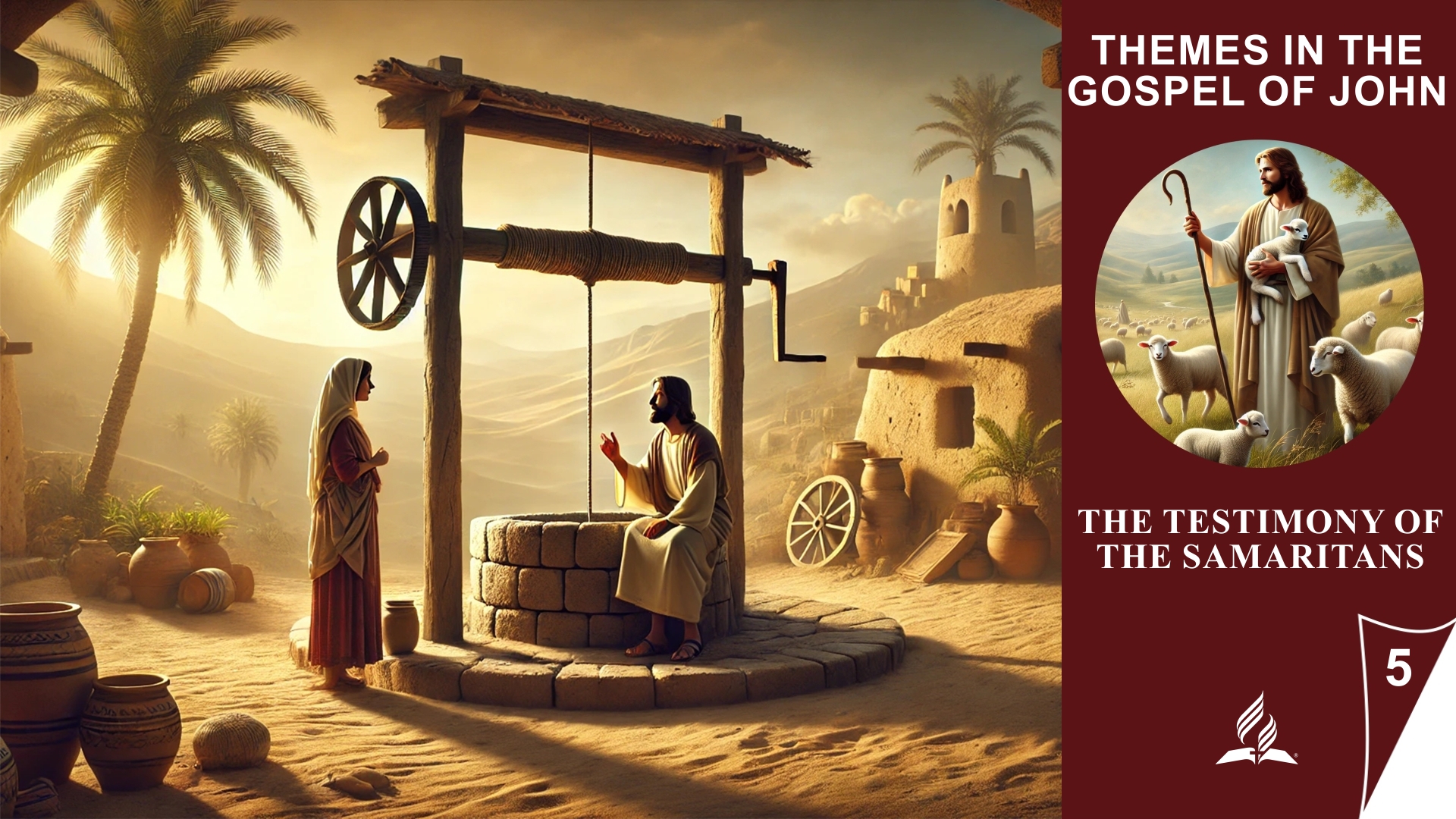
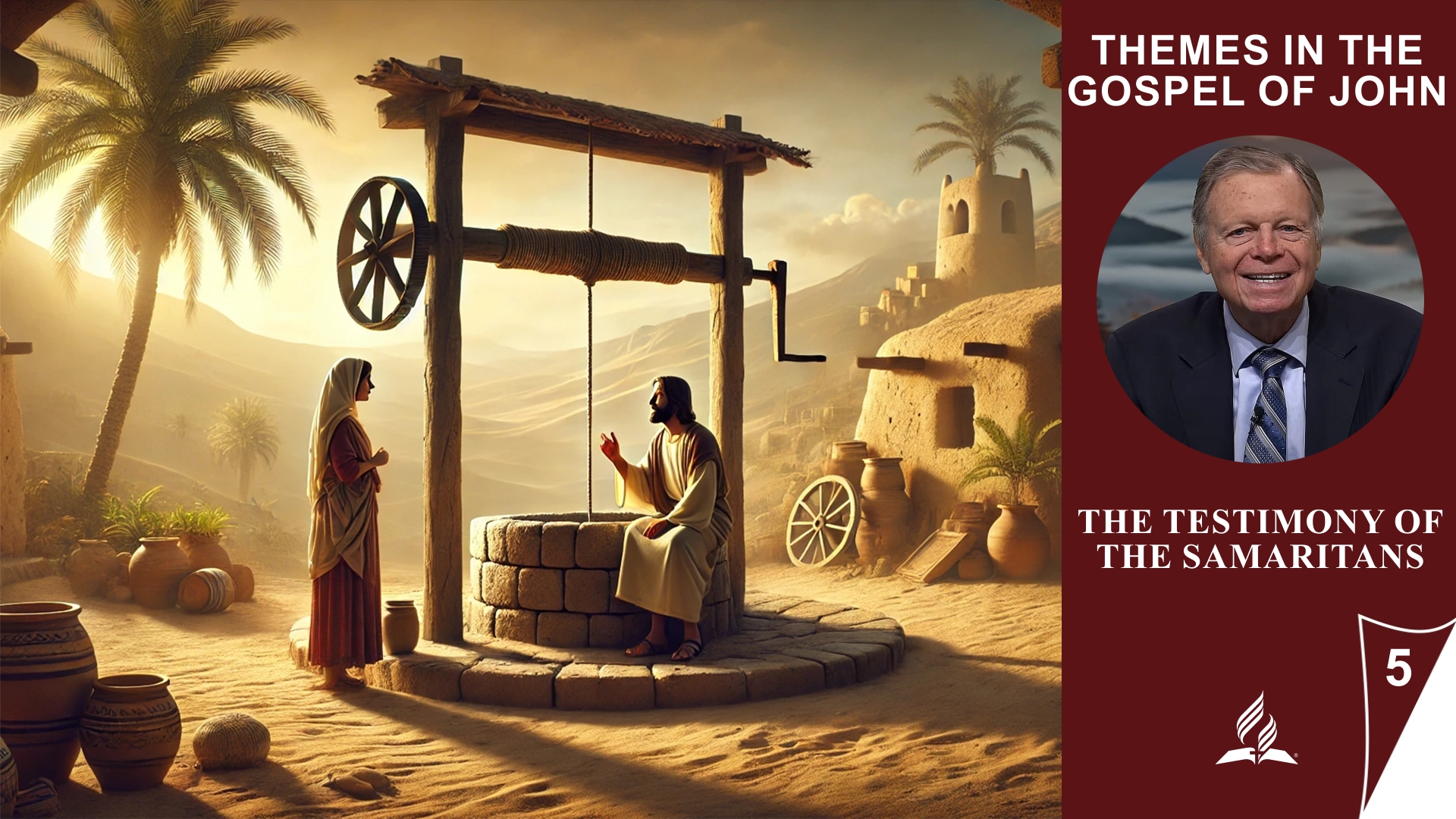
The encounter between Jesus and the Samaritan woman at Jacob’s well near Sychar is remarkable in many ways. Jesus, a Jewish man and teacher, asked a Samaritan woman for a drink of water. This simple act breaks several societal and religious norms. Jews and Samaritans had a long history of hostility, and it was unusual for a Jewish man to speak publicly with a woman, especially a Samaritan woman.
The circumstances of this meeting are also significant. The woman came at noon, the hottest hour of the day, to draw water—an unusual time, as most women came early in the morning or in the evening when it was cooler. This timing suggests that she may have been socially isolated and avoided contact with others. Whatever the reason for her arrival at that time, her encounter with Jesus was to profoundly change her life.
By asking her for water, Jesus initiates a conversation in a simple, everyday manner that is also profound. He places Himself in a position of need, which gives the woman the opportunity to give Him something—a chance for humanity and openness. In this gesture, Jesus shows that He is not only seeking physical water but that this encounter is a symbol of deeper spiritual needs and the “living water” He will soon offer her.
The setting is rich in symbolism: a Jewish teacher and a Samaritan woman with a questionable reputation meet at the well. This contrast between their social and religious backgrounds sets the stage for a transformative encounter that will not only touch the woman’s life but also convey a deeper message about Jesus’ boundless love and acceptance.
What Taboo Exists in Your Culture That Could Hinder Your Testimony to Others? How Can We Learn to Overcome It? Discuss on the Sabbath.
Taboos that exist in our culture can often hinder our ability to give an authentic and open testimony to others. These taboos vary depending on cultural and social contexts, but some common examples include:
  1. Avoiding Faith Conversations: In many cultures, it is considered inappropriate to talk about religion or personal faith, especially in public or mixed groups. The fear of offending others or getting into conflicts can lead people to not openly share their beliefs, even if they could help or inspire someone.
  2. Prejudices Against Certain Social Groups: Prejudices or fixed notions about certain social or ethnic groups can also be an obstacle. If these prejudices remain unconscious, they can prevent us from approaching certain people with openness and empathy.
  3. Fear of Social Rejection: It is often taboo to act against societal consensus or to be “different.” This fear can lead people to not speak openly about their faith or to actively support it, so as not to be socially isolated.
  4. Maintaining Individual Distance: In some cultures, it is considered impolite to ask personal questions or to get close to others, which can make sharing faith experiences difficult. People prefer to discuss superficial topics without giving deeper insights into their own lives or faith.
How Can We Learn to Overcome These Taboos?
  1. Practice Empathy and Listening: To overcome cultural barriers, it is important to develop an attitude of empathy and listen to people before we speak ourselves. This helps us better understand their perspective and find a way that brings us closer together.
  2. Speak Gently and Respectfully About Faith: When we talk about our faith sensitively and respectfully, we can break taboos without hurting the other person’s culture. Instead of being intrusive, we can share experiences and stories that present faith in an accessible and understandable way.
  3. Be a Role Model: Often, our testimony is strongest through our behavior and actions. A life that reflects the values and principles of faith can be inspiring and break down barriers without us having to explicitly talk about faith.
  4. Seek Support in the Community: When we talk with other believers about these challenges and encourage each other, it helps us live our faith more authentically in everyday life. Sabbath discussions provide a valuable opportunity to share experiences and find solutions to break taboos in our cultures.
These points could serve as a basis for discussion on the Sabbath, to consider how we can personally and collectively contribute to overcoming cultural barriers and sharing our faith boldly and lovingly.
Jesus’ journey through Samaria and His encounter with the Samaritan woman at the well show us how we can live our faith authentically in our daily lives, even when there are cultural barriers. This story teaches us two essential principles that are also relevant for our lives and faith journey today:
  1. Live Boundless Love and Inclusion: Jesus consciously chose to travel through Samaria, a region that most Jews avoided because they feared cultural and religious differences. By choosing this path, He shows us that God’s love includes all people, regardless of origin, status, or societal expectations. In our daily lives, this means that we should be willing to approach people who may have a different culture, belief, or way of life. Like Jesus, we can learn to seek encounters across cultural boundaries based on openness and empathy, thereby conveying faith through our actions.
  2. Demonstrate Faith in Everyday Situations: Jesus’ request for water was a simple, everyday action, yet it led to a profound conversation about faith and life. This scene reminds us that our testimony often comes through small, everyday moments. In daily life, we can similarly find opportunities to show our faith through kindness, helpfulness, and authentic conversations without being intrusive. When we act consciously and with an open heart, even ordinary encounters can become significant moments where our counterpart experiences a glimpse of God’s love.
How Do We Overcome Cultural Taboos?
Our daily lives are often shaped by societal norms that deem conversations about faith or spiritual topics as inappropriate. However, Jesus’ example teaches us that there are ways to overcome these taboos without pressuring anyone or violating societal boundaries. By practicing empathy, communicating our values gently and respectfully, and demonstrating through our actions, we can reach people without forcing words. These steps encourage us to live the Gospel daily and be a testimony through authentic actions.
Discussion on the Sabbath: The Sabbath offers us the chance to encourage one another and share experiences about how we handle cultural barriers in everyday life. Through such conversations, we recognize that we are not alone and learn from each other how to boldly and lovingly convey Jesus’ message.

Every small act of kindness can be a light that brightens someone else’s day.

Source: https://fulfilleddesire.net/lesson-5-the-testimony-of-the-samaritans-5-1-the-setting-of-the-encounter-themes-in-the-gospel-of-john-living-faith/

Share this:

  • Share on Facebook (Opens in new window) Facebook
  • Share on LinkedIn (Opens in new window) LinkedIn
  • Share on X (Opens in new window) X
  • Share on Pinterest (Opens in new window) Pinterest

Like this:

Like Loading…

Filed Under: Adventist Sermons & Video Clips, Fulfilled Desire

27.10.2024 – John Chapter 21 | BELIEVE HIS PROPHETS

October 26, 2024 By admin

October 27, 2024
DAILY BIBLE READING – John Chapter 21
1 After these things Jesus shewed himself again to the disciples at the sea of Tiberias; and on this wise shewed he himself.
2 There were together Simon Peter, and Thomas called Didymus, and Nathanael of Cana in Galilee, and the sons of Zebedee, and two other of his disciples.
3 Simon Peter saith unto them, I go a fishing. They say unto him, We also go with thee. They went forth, and entered into a ship immediately; and that night they caught nothing.
4 But when the morning was now come, Jesus stood on the shore: but the disciples knew not that it was Jesus.
5 Then Jesus saith unto them, Children, have ye any meat? They answered him, No.
6 And he said unto them, Cast the net on the right side of the ship, and ye shall find. They cast therefore, and now they were not able to draw it for the multitude of fishes.
7 Therefore that disciple whom Jesus loved saith unto Peter, It is the Lord. Now when Simon Peter heard that it was the Lord, he girt his fisher’s coat unto him, (for he was naked,) and did cast himself into the sea.
8 And the other disciples came in a little ship; (for they were not far from land, but as it were two hundred cubits,) dragging the net with fishes.
9 As soon then as they were come to land, they saw a fire of coals there, and fish laid thereon, and bread.
10 Jesus saith unto them, Bring of the fish which ye have now caught.
11 Simon Peter went up, and drew the net to land full of great fishes, an hundred and fifty and three: and for all there were so many, yet was not the net broken.
12 Jesus saith unto them, Come and dine. And none of the disciples durst ask him, Who art thou? knowing that it was the Lord.
13 Jesus then cometh, and taketh bread, and giveth them, and fish likewise.
14 This is now the third time that Jesus shewed himself to his disciples, after that he was risen from the dead.
15 So when they had dined, Jesus saith to Simon Peter, Simon, son of Jonas, lovest thou me more than these? He saith unto him, Yea, Lord; thou knowest that I love thee. He saith unto him, Feed my lambs.
16 He saith to him again the second time, Simon, son of Jonas, lovest thou me? He saith unto him, Yea, Lord; thou knowest that I love thee. He saith unto him, Feed my sheep.
17 He saith unto him the third time, Simon, son of Jonas, lovest thou me? Peter was grieved because he said unto him the third time, Lovest thou me? And he said unto him, Lord, thou knowest all things; thou knowest that I love thee. Jesus saith unto him, Feed my sheep.
18 Verily, verily, I say unto thee, When thou wast young, thou girdest thyself, and walkedst whither thou wouldest: but when thou shalt be old, thou shalt stretch forth thy hands, and another shall gird thee, and carry thee whither thou wouldest not.
19 This spake he, signifying by what death he should glorify God. And when he had spoken this, he saith unto him, Follow me.
20 Then Peter, turning about, seeth the disciple whom Jesus loved following; which also leaned on his breast at supper, and said, Lord, which is he that betrayeth thee?
21 Peter seeing him saith to Jesus, Lord, and what shall this man do?
22 Jesus saith unto him, If I will that he tarry till I come, what is that to thee? follow thou me.
23 Then went this saying abroad among the brethren, that that disciple should not die: yet Jesus said not unto him, He shall not die; but, If I will that he tarry till I come, what is that to thee?
24 This is the disciple which testifieth of these things, and wrote these things: and we know that his testimony is true.
25 And there are also many other things which Jesus did, the which, if they should be written every one, I suppose that even the world itself could not contain the books that should be written. Amen.
King James Version. Public Domain


Commentary
Introduction:
John Chapter 21 describes one of the final encounters of Jesus with His disciples after His resurrection. It takes place by the Sea of Tiberias, where Jesus miraculously appears to His disciples and gives them renewed confirmation of His authority and love. The role of Peter, who receives a special task from Jesus, is particularly emphasized, as well as the relationship between Peter and the “disciple whom Jesus loved.” This chapter concludes the Gospel of John and underscores the importance of personal faith and following Jesus.
Commentary:
The chapter begins with a seemingly ordinary scene: Peter and some other disciples return to their former activity of fishing. This return to everyday life perhaps reflects their uncertainty about how to proceed after Jesus’ resurrection. Despite all their efforts, they catch nothing all night—a sign that human endeavors without God’s guidance often remain unsuccessful.
Jesus appears on the shore, unrecognized by the disciples, and asks them if they have caught anything. His instruction to cast the net on the right side of the boat leads to an overwhelming catch, so large that the disciples can barely pull the net in. This miracle echoes an earlier encounter between Jesus and Peter, where a similar miracle occurred (Luke 5:1-11). This repetition highlights the disciples’ ongoing dependence on Jesus and His willingness to meet them even in their daily lives.
It is John who first recognizes that it is Jesus, and Peter acts immediately: he jumps into the water to reach Jesus as quickly as possible. This impulsive and passionate reaction is typical of Peter and demonstrates his deep longing to see Jesus again. When they finally arrive at the shore, they find Jesus who has already prepared a fire with fish and bread on it. This scene is a clear reminder of the Last Supper and points to the spiritual nourishment that Jesus offers His disciples.
A particularly significant moment is the conversation between Jesus and Peter. Three times, Jesus asks Peter, “Do you love me?”—a reference to Peter’s threefold denial before Jesus’ crucifixion. This triple question and answer serve as a form of restoration for Peter. Jesus entrusts him with the task of tending His “sheep,” confirming Peter’s future role as the leader and shepherd of the Christian community. It is an act of forgiveness and a renewal of trust in Peter, despite his earlier failure.
However, Jesus’ repeated question also presents a deeper challenge. He is not merely asking for affection but for a deep, unconditional love and commitment. Peter, who becomes distressed at the third question, realizes that Jesus knows everything, including his weaknesses and fears. Nevertheless, Peter once again confesses his love for Jesus, and Jesus entrusts him with the leadership of the community. This demonstrates that true discipleship is often shaped by weakness and failure but can be restored through God’s grace.
Another important moment in this chapter is the brief discussion about the “disciple whom Jesus loved.” When Peter asks what will happen to this disciple, Jesus gently corrects him, saying, “What does this matter to you? You must follow me!” This response emphasizes that each disciple has their own calling and that faith is a personal journey. Peter should not concern himself with the paths of others but focus on his own following of Jesus. This statement is not only directed at Peter but also to all believers who often get entangled in comparisons with others.
The chapter concludes with a reflection on John’s testimony and the many other deeds of Jesus that were not recorded. This highlights the limitations of written testimony and emphasizes that faith goes beyond what is written. The world could not fully capture all of Jesus’ works, leaving room for the boundless impact of His life and message.
Summary:
In John 21, the risen Jesus appears to His disciples by the Sea of Tiberias. He performs a miracle by helping them catch a large number of fish after they had caught nothing all night. On the shore, Jesus shares a meal with them and restores Peter through a threefold questioning of his love for Jesus. Jesus entrusts Peter with the responsibility to lead His community and emphasizes the importance of focusing on one’s own discipleship. The chapter ends with a reflection on John’s testimony and the acknowledgment that not all of Jesus’ deeds are recorded in the Scriptures. John 21 emphasizes personal discipleship, forgiveness, and the ongoing presence of Jesus in the community of His followers.


WEEKLY SPIRIT OF PROPHECY READING – Ellen White | The Desire of Ages
Chapter 73—“Let Not Your Heart Be Troubled”
This chapter is based on John 13:31-38; John 14; John 15; John 16; John 17.
Read online here


Commentary
Introduction:
Chapter 73 depicts the deep, moving words that Jesus gave to His disciples before His arrest and death. These sections of Scripture are particularly significant because Jesus prepares His disciples for the impending separation and encourages them not to despair despite the forthcoming difficulties. He emphasizes the necessity of faith in Him and in God and speaks about the importance of the Holy Spirit as a Comforter. The connection between the disciples and Jesus is highlighted as a vital component of the Christian faith, which remains relevant even today.
Commentary:
This chapter especially reveals the intimate relationship between Jesus and His disciples. Despite the sadness over His impending absence, Jesus strives to comfort them and provide them with a perspective of hope. He reveals the central significance of His sacrifice and emphasizes that His departure is not the end but the beginning of a new phase of their mission. The promise of the Holy Spirit shows that they will never be alone, even though He will no longer be physically with them. It is also interesting that Jesus highlights the importance of love and obedience. Love for God and for one another is emphasized as a sign of discipleship. This inner connection between love, faith, and obedience is a key to understanding and living out Christian discipleship.
Summary:
Chapter 73 describes the final moments that Jesus spent with His disciples before His arrest. He promises them that they will not remain alone but will receive the Holy Spirit as a Comforter. Jesus’ words emphasize the necessity of remaining in Him and obtaining eternal life through Him. Through the Holy Spirit, the disciples are empowered to continue Jesus’ work, accomplish greater things, and live in unity with one another. The chapter highlights the importance of faith, love, and obedience, which are necessary to remain connected to Christ. The message is timeless: even in difficult times, believers should trust in the Holy Spirit and be guided by the love and word of Christ.

Source: https://fulfilleddesire.net/27-10-2024-john-chapter-21-believe-his-prophets/

Share this:

  • Share on Facebook (Opens in new window) Facebook
  • Share on LinkedIn (Opens in new window) LinkedIn
  • Share on X (Opens in new window) X
  • Share on Pinterest (Opens in new window) Pinterest

Like this:

Like Loading…

Filed Under: Adventist Sermons & Video Clips, Fulfilled Desire

Themes in the Gospel of John – Lesson 5.The Testimony of the Samaritans | Sabbath School with Pastor Mark Finley

October 26, 2024 By admin

Series JESUS IN THE GOSPEL OF JOHN with Pastor Mark Finley  |
Lesson 5.The Testimony of the Samaritans  |
A simple testimony that moves hearts and overcomes barriers  
|
In John 4, Jesus encounters a Samaritan woman at Jacob’s well, and through a simple conversation, He reveals profound spiritual truths to her. Despite cultural and social barriers, the woman recognizes that she is in the presence of the Messiah. Excited by this revelation, she leaves her water jar behind and hurries into the town to tell others about Jesus. Her testimony leads many Samaritans to believe in Christ. This encounter demonstrates how powerful a simple personal testimony can be in spreading the Gospel and overcoming barriers.
Memory Text: John 4:42 – “Then they said to the woman, ‘Now we believe, not because of what you said, for we ourselves have heard Him and we know that this is indeed the Christ, the Savior of the world’.”
Content:
5.1 The Setting of the Encounter
The Road through Samaria: Jesus’ Mission Beyond Cultural Barriers
Jesus traveled through Samaria not only to avoid tensions with the Pharisees but because He had a deeper mission there. While other Jews avoided this path, Jesus deliberately sought out encounters with the Samaritans, who were considered outcasts. At Jacob’s well, He took the opportunity to start a conversation with a woman who was drawing water around noon, which was unusual. His simple request for water opened the door to a deep spiritual conversation that changed the woman. This encounter shows how Jesus broke through social and cultural barriers to proclaim the message of salvation. His example encourages us to dismantle prejudices and boldly bear witness, even in challenging situations.
5.2 The Woman at the Well
Living Water: Jesus’ Invitation to Inner Renewal
Jesus used the encounter with the woman at the well to subtly convey a deeper spiritual truth. Instead of immediately offering her a gift, He first asked her for a favor, thereby building trust and overcoming a barrier. By referring to the “living water,” He shifted the conversation from an everyday topic to a spiritual reality—the need for renewal through God. The woman, surprised by His request, began to understand that Jesus was more than just an ordinary man. Like Nicodemus, who needed a conversion experience, Jesus also showed this woman that true life is only possible through a deep connection with God. The “living water” symbolizes the eternal life that Jesus gives to anyone who believes in Him.
5.3 “Sir, Give Me This Water”
Living Water: From Physical Need to Spiritual Healing
The woman’s request for the living water shows her misunderstanding, as she initially took Jesus’ offer literally. Similar to Nicodemus, who misunderstood rebirth, she saw only practical relief, not the deeper spiritual meaning. Jesus skillfully steered the conversation to her personal situation to show her that she needed inner renewal and healing before she could receive the “living water”—a symbol for eternal life. As described in Ezekiel 36:25-27, her heart first needed to be cleansed and renewed to walk in God’s ways. This illustrates the necessity of being aware of one’s own faults to experience true healing and transformation.
5.4 The Revelation of Jesus
The Revelation of the Messiah: An Encounter Beyond Prejudices
Jesus reveals to the Samaritan woman that He knows her deepest secrets by disclosing her life and personal situation. Instead of dealing with these painful truths, she evades and redirects the conversation to religious disputes. However, Jesus brings the discussion back to the essential point: true worship is not tied to a specific location but must be done in spirit and truth. Finally, He reveals to her that He is the Messiah, and not in front of a large crowd, but to a simple, marginalized woman. This encounter shows that Jesus knows no barriers regarding origin or moral status—the Gospel is accessible to all and overcomes all human boundaries.
5.5 The Testimony of the Samaritans
The Power of a Personal Testimony: One Woman Changes a City
Surprisingly, after her encounter with Jesus, the woman left her water jar behind and hurried into the town to tell the people what she had experienced. Her honest and simple invitation, “Come, see a man who told me everything I ever did,” sparked curiosity and led many Samaritans to come to Jesus. Her personal testimony served as a powerful catalyst that led many people to believe in Jesus. This story demonstrates how a single encounter with Christ can change the lives of many and that even a simple personal testimony can have far-reaching effects. It teaches us that the Gospel, when shared authentically, can overcome barriers and open hearts.
5.6 Summary
The Testimony of the Samaritans: How a Personal Testimony Spreads the Gospel
In John Chapter 4, Jesus meets a Samaritan woman at Jacob’s well and reveals to her that He is the Messiah. This encounter changes the woman’s life, and she subsequently rushes into the town to report about Jesus. Her testimony leads many Samaritans to believe in Him. Through her simple account and invitation to meet Jesus herself, the Gospel spreads throughout her town. This story illustrates how a personal encounter with Christ and an honest testimony can change the lives of many people. It emphasizes that the Gospel can overcome barriers and reach people of all backgrounds.

Source: https://fulfilleddesire.net/themes-in-the-gospel-of-john-lesson-5-the-testimony-of-the-samaritans-sabbath-school-with-pastor-mark-finley/

Share this:

  • Share on Facebook (Opens in new window) Facebook
  • Share on LinkedIn (Opens in new window) LinkedIn
  • Share on X (Opens in new window) X
  • Share on Pinterest (Opens in new window) Pinterest

Like this:

Like Loading…

Filed Under: Adventist Sermons & Video Clips, Fulfilled Desire, Sabbath School

Lesson 4.Witnesses of Christ as the Messiah | 4.7 Questions | THEMES IN THE GOSPEL OF JOHN | LIVING FAITH

October 25, 2024 By admin

1.John the Baptist came to prepare the way for Jesus. How successful would you consider his work, at least from a human perspective? When reflecting on your answer, also consider the important question: How do you define “success” in spiritual matters?
John the Baptist was sent to prepare the way for Jesus, and his role was crucial in proclaiming the coming Messiah. From a human perspective, one might initially judge his success differently. On one hand, John had a large following, was respected, and recognized as a prophet, making him an influential figure. Many people followed him and were baptized by him, which spread his message widely. In this sense, one could say he was successful from a human viewpoint.
On the other hand, John’s life ended in imprisonment, and he was ultimately executed. From a worldly perspective, this could be seen as a failure or an abrupt and dishonorable end to his mission. However, in spiritual terms, success is not defined by worldly achievements, recognition, or external influence. Success in spiritual matters is measured by whether one is doing God’s will, maintaining faith, and fulfilling one’s calling. John’s mission was to prepare the way for Jesus and point to Him, and he did so faithfully and courageously until the end.
The spiritual definition of success, therefore, is not in external fame or a long life, but in being faithful to God, fulfilling His mission, and leading others to Christ. In this sense, John’s work was extremely successful, as he fully fulfilled his role as the forerunner of the Messiah, pointed many people to Jesus, and did not abandon his faith even in the face of death.
2.Later, John the Baptist expressed some sincere doubts (Matt 11:2–3; Luke 7:19). What were the reasons for his questions, and what can we learn from this about how to stay firm in our faith?
John the Baptist expressed doubts in Matthew 11:2–3 and Luke 7:19 while he was in prison. He sent his disciples to Jesus with the question, “Are you the one who is to come, or should we expect someone else?” These doubts were surprising, as John had previously clearly testified that Jesus is the Messiah (John 1:29). However, these moments of uncertainty show that even spiritually strong individuals can experience doubts in difficult times.
Reasons for John’s Doubts:
  1. Imprisonment and Isolation: John was in prison, isolated, and in an extreme life situation, which can lead to uncertainty. Such circumstances often negatively affect thinking and faith, as one may feel abandoned and helpless.
  2. Unmet Expectations: John may have, like many others, expected the Messiah to be a powerful deliverer and judge who would free Israel from its oppressors, such as the Romans. Seeing Jesus in His role as a gentle teacher and healer might have confused him, as this role did not align with traditional notions of a mighty, political Messiah.
  3. Lack of Direct Intervention: John saw no visible signs that Jesus would end his suffering or free him from prison in any way. Jesus’ silence could have increased his doubts about whether Jesus was indeed the promised Savior.
What We Can Learn:
  1. Doubts Are Human: John the Baptist, considered one of the most important biblical figures, experienced doubts. This shows that doubts in the faith life are normal and do not mean that someone has lost their faith. It is important to recognize that even faithful servants of God struggle with uncertainties and questions.
  2. Hope in Times of Darkness: John was isolated and suffering. In such moments, we tend to see reality distorted. Instead of giving up faith, John sent his disciples to Jesus to seek clarity. This teaches us that in difficult times, we should come to Jesus and honestly express our doubts, rather than being overwhelmed by them.
  3. Recognizing That God’s Plan Is Different: John’s doubts were also based on false expectations of the Messiah. We can learn that God often acts differently than we expect. Our understanding of God’s plan can be limited, and it is important to trust God’s bigger plan, even if it does not align with our short-term expectations.
  4. Staying Firm in Faith: When Jesus responded to John’s question, He not only referred to the miracles He was performing but also cited messianic prophecies (Matt 11:4–6). He indirectly encouraged John to strengthen his faith through the Scriptures and the fulfillment of the prophecies. This shows us that we should base our faith on God’s Word and His promises, especially in times of doubt.
Conclusion:
John the Baptist teaches us that even the strongest believers can face doubts. In such moments, our relationship with God, trust in His promises, and willingness to bring our uncertainties to Him help us stay firm in faith. Doubts can be an opportunity to deepen our faith if we approach God in these moments and seek clarity and strength from Him.
3.Discuss how someone like Nicodemus, a leader in the true church who certainly possessed much knowledge, could still be so spiritually ignorant regarding what truly matters. What lessons can we draw from his situation?
Nicodemus was a respected teacher and member of the Sanhedrin, the highest Jewish religious and political authority. As such, he possessed extensive knowledge of the Scriptures, Jewish traditions, and laws. Yet, despite his intellectual and religious knowledge, he lacked a deep understanding of the spiritual truths that Jesus was trying to convey—particularly the necessity of “rebirth” through the Holy Spirit (John 3:3). This raises the question of how someone with so much religious knowledge could remain spiritually ignorant.
Reasons for Nicodemus’ Spiritual Ignorance:
  1. Intellectual Knowledge Without Spiritual Understanding: Nicodemus knew the Scriptures and the prophecies well, but his knowledge was more theoretical than spiritual. He had much intellectual insight into God and the laws, but lacked personal experience and inner revelation. He viewed faith mainly as something external—law obedience and religious duties—and did not grasp the core of spiritual repentance and renewal.
  2. Traditions and Religious Systems: As a member of the Sanhedrin, Nicodemus was deeply embedded in religious traditions and Jewish law. These traditions were often so strong that they hindered the understanding of deeper spiritual truth. For Nicodemus, it was difficult to break away from the entrenched belief system and accept Jesus’ revolutionary teachings.
  3. Pride and Status: Nicodemus held a respected position in society. This status could have made it difficult for him to adopt an attitude of humility and accept that, despite his knowledge, he did not understand something essential. It is often hard for people in leadership positions to admit that they still need spiritual growth.
  4. Lack of Personal Spiritual Experience: Nicodemus was a scholar, but he seemed to lack a deep personal encounter with God. He may have intellectually grasped the teachings of the Scriptures but did not experience the transformative power of the Spirit. This personal connection is what Jesus describes as “being born again”—a spiritual renewal that goes deeper than mere knowledge.
Lessons from Nicodemus’ Situation:
  1. Knowledge Alone Is Not Enough: Spiritual maturity is not achieved solely through intellectual knowledge or understanding of religious texts. Even the most accurate knowledge of the Bible or religious laws does not necessarily lead to deep spiritual understanding. We must cultivate a personal relationship with God and allow His Spirit to guide us to gain true spiritual insight.
  2. The Danger of Pride and Self-Righteousness: Nicodemus’ position and knowledge might have prevented him from recognizing that he needed to learn something new. Pride or reliance on our own wisdom can be obstacles that prevent us from receiving God’s revelations. Spiritual humility is essential to be willing to learn from God, regardless of our status or knowledge.
  3. Traditions Can Block Understanding: Religious traditions and systems can sometimes hinder the understanding of true spiritual meaning. Nicodemus was deeply involved in Jewish traditions, which emphasized a law-based faith. However, Jesus taught that faith goes beyond traditions and laws and requires personal, inner renewal. This reminds us that we should be open to new revelations from God, even if they contradict our previous beliefs.
  4. Spiritual Rebirth: Jesus’ central teaching to Nicodemus was that every person—regardless of their knowledge or religious position—must be reborn to see the kingdom of God (John 3:3). This spiritual rebirth is a transformative experience brought about by the Holy Spirit. It means beginning a new life in Christ and seeking a deeper, inner relationship with God.
Conclusion:
Nicodemus shows us that intellectual knowledge and religious positions alone are not sufficient to recognize true spiritual truth. Spiritual understanding does not come through external rituals or following laws, but through personal, inner renewal and the guidance of the Holy Spirit. His story reminds us that we must remain open and humble to grow in our faith and allow God to transform us.

Source: https://fulfilleddesire.net/lesson-4-witnesses-of-christ-as-the-messiah-4-7-questions-themes-in-the-gospel-of-john-living-faith/

Share this:

  • Share on Facebook (Opens in new window) Facebook
  • Share on LinkedIn (Opens in new window) LinkedIn
  • Share on X (Opens in new window) X
  • Share on Pinterest (Opens in new window) Pinterest

Like this:

Like Loading…

Filed Under: Adventist Sermons & Video Clips, Fulfilled Desire

  • « Previous Page
  • 1
  • …
  • 198
  • 199
  • 200
  • 201
  • 202
  • …
  • 749
  • Next Page »

Hi-D Pure Vitamin D!

Hi-D Mushroom Vitamin D Capsules

Intercer Ministry – Since 1997!

We’re on Pinterest!

Partners


The Seven Thunders Ministry

Recent Posts

  • 11: Stewardship and Mission — Singing with Inspiration
  • UPDATE: ‘A Second Chance at Life’: Leah Stewart Continues Recovery After Shark Attack
  • 🌱 Quando sembra che nulla stia cambiando, può essere difficile continuare a sperare.
  • Want to Understand Yourself? Study the Artist
  • División Interamericana lanza OneVoice27, iniciativa que busca movilizar a toda la iglesia hacia 2027

About Intercer

Intercer is a website with biblical materials in Romanian, English, Hungarian and other languages. We want to bring the light from God's Word to peoples homes. Intercer provides quality Christian resources...[Read More]

Lucian Web Service


Intercer is proudly sponsored by Lucian Web Service - Professional Web Services, Wordpress Websites, Marketing and Affiliate Info. Lucian worked as a subcontractor with Simpleupdates, being one of the programmers for the Adventist Church Connect software. He also presented ACC/ASC workshops... [read more]

Archives

Follow @intercer

Categories

[footer_backtotop]

Website provided by: Intercer Romania · Intercer Canada · Lucian Web Service · Privacy · Log in


%d